Inside the Grand National Buick: Turbocharged V6 Innovation – The Black Sleepr That Killed the Corvette
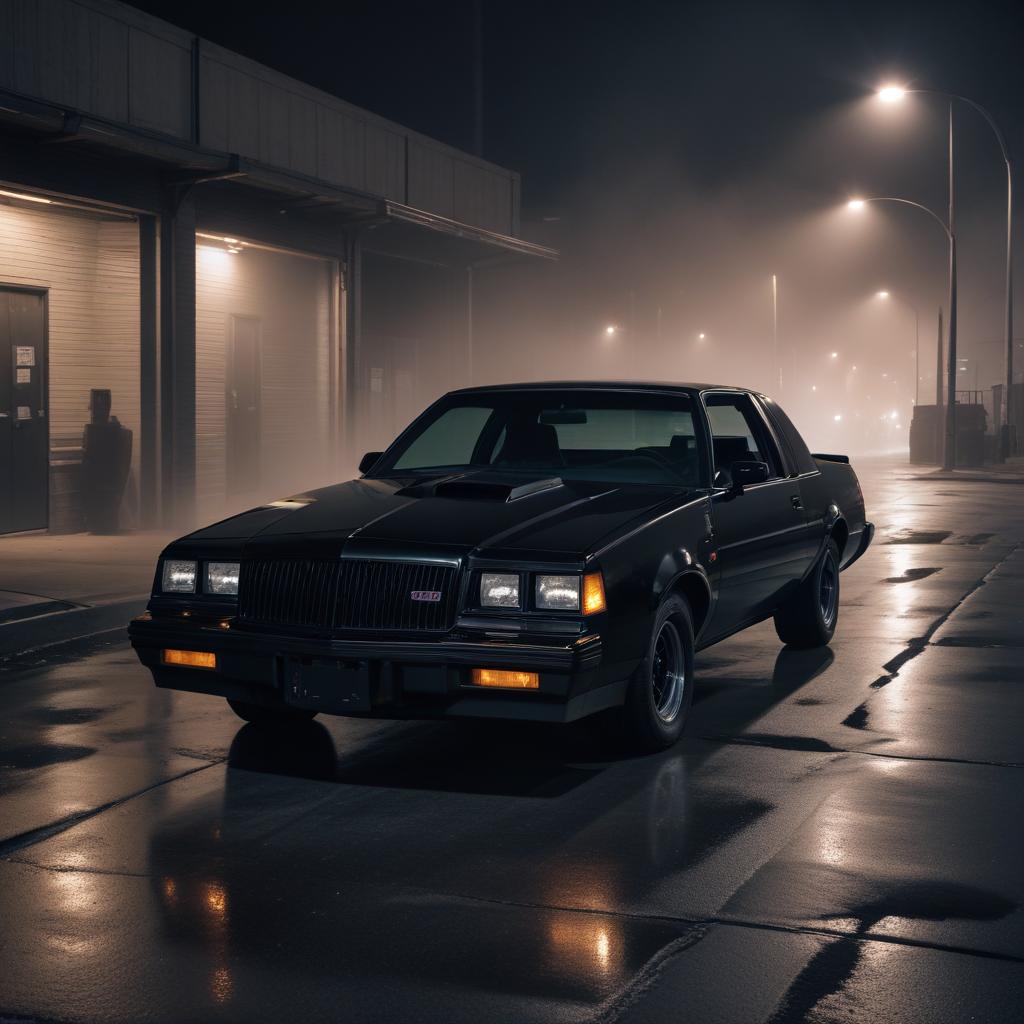
You’re sitting in a 1987 GNX, the ceramic-turbo V6 spools up at 2,400 rpm, 360 lb-ft of torque slams you into the seat, and the Corvette owner in the next lane refuses to make eye contact—because his $35,000 sports car just lost to a $29,000 Buick with cloth seats and an 85-mph speedometer.
TL;DR
The Buick Grand National isn’t just a muscle car. It’s the ultimate automotive “what if”—what if Detroit had embraced turbocharging a decade before everyone else? What if a luxury division decided to embarrass its own performance brands? What if a V6 could humiliate V8s? The story starts in 1975 with a Michigan Explorer Scout troop, a free Garrett turbocharger, and engineer Don Baker’s after-hours project that caught the eye of Buick’s chief engineer, Lloyd Reuss . By 1978, Buick was selling turbo V6s. By 1984, the Grand National was a dedicated model with 200 hp and 300 lb-ft from its 3.8-liter LC2 V6 . The 1986 addition of an air-to-air intercooler bumped power to 235 hp . But the 1987 GNX—developed with McLaren/ASC, limited to 547 units—is the legend: ceramic turbo impeller, enlarged exhaust housing, reprogrammed ECU, and an underrated 276 hp that actually approached 300 while torque hit 400 lb-ft . It ran 0-60 in 4.7 seconds and the quarter-mile in 13.4 seconds at 104 mph—faster than the Ferrari Testarossa and Porsche 911 Turbo, and absolutely devastating to the Chevrolet Corvette . GM brass was furious. Buick didn’t care. Today, thanks to Kendrick Lamar’s 2024 album GNX and its Super Bowl halftime show appearance, the legend is bigger than ever . Modern builders like Ringbrothers and Roadster Shop are creating twin-turbo V6 and V8 monsters pushing 1,200–1,600 hp, proving the platform’s potential was always about 30 years ahead of its time .
Key Takeaways
- It started with a Boy Scout project: Don Baker’s 1975 turbo Buick for an Explorer Scout troop became the 1976 Indy 500 pace car, then the 1978 production Turbo Regal .
- The Grand National name originally honored NASCAR: Buick won the 1981–1982 Grand National championship and built ~215 commemorative 1982 Regals—but most had a 4.1L naturally aspirated V6, not the turbo .
- The 1984–1987 Grand Nationals are the real deal: 200–245 hp, 300–355 lb-ft torque, sequential fuel injection, distributorless ignition, and—starting 1986—a Garrett air-to-air intercooler .
- The GNX (Grand National Experimental) is the holy grail: 547 units, co-developed by ASC/McLaren, ceramic turbo impeller, 16-inch wheels, fender flares, and a dash plaque with serial number .
- Buick intentionally underrated the GNX: Official spec was 276 hp, but dyno tests and independent sources confirm 300+ hp and nearly 400 lb-ft. GM didn’t want to admit a Buick outran a Corvette .
- The “Darth Vader” car is a cultural icon: Kendrick Lamar’s 2024 album GNX and his Super Bowl LIX halftime show—featuring an actual GNX gutted for dancers to emerge—introduced the legend to millions .
- Modern builds are insane: Ringbrothers’ “INVADR” packs a twin-turbo 3.8L V6 making 1,246 hp at the wheels on 32 psi (2,000 hp potential). Roadster Shop’s 1,500-hp twin-turbo LS7 V8 Grand National proves the platform’s versatility .
The Unlikely Birth: From Scout Project to Indy Pace Car
Here’s the thing about the Grand National that still blows people’s minds: it exists because of a Boy Scout.
In 1975, Buick engineer Don Baker was helping an Explorer Scout troop in Flint, Michigan, with an automotive project. He’d scored a free Garrett AiResearch turbocharger and wanted to bolt it onto something. Baker asked Jack DeCou, Buick’s experimental engineering boss, for a little official help. DeCou said yes .
The finished project car caught the eye of Lloyd Reuss, Buick’s chief engineer. Reuss—father of current GM President Mark Reuss—looked at that turbocharged Buick under the hood and saw the future. It wasn’t V8s. It wasn’t even muscle in the traditional sense. It was efficiency meeting brutality .
1976: The turbo V6 Buick Century becomes the Indy 500 pace car. Millions watch. The program goes from “after-hours hobby” to “official development project” overnight .
1978: First production turbo Buicks hit the streets. The 3.8-liter (231 cubic inch) V6 makes 150 hp with a two-barrel carb, 165 hp with four-barrel. Torque: 245–265 lb-ft. This was the opening salvo .
1977–1978 engineering breakthrough: Buick redesigned the V6 crankshaft to fire at even 120-degree intervals instead of the odd-fire pattern that made early Buick V6s sound like unbalanced washing machines. The “even-fire” engine was smoother, revved happier, and took boost like a champ .
Lloyd Reuss later said of the early turbo cars: “Fast With Class.” It became the unofficial motto of the entire program .
The Name Game: Grand National, T-Type, and the NASCAR Connection
By 1981, Buick was winning in NASCAR’s Grand National series. Lloyd Reuss—now Buick’s general manager—wanted to celebrate. The plan: a commemorative edition Regal called the Grand National .
February 10, 1982: Buick unveils the first Grand National at the Daytona 500. Silver and black T-top Regal, “Grand National” fender badges, Buick’s new stylized “6” logo designed by Rollin “Molly” Sanders, blackout trim, front air dam, rear spoiler, special interior .
The catch: Most of the ~215 cars built came with a 4.1-liter naturally aspirated V6 making 125 hp. Not exactly “Fast With Class.”
A handful of 1982 Grand Nationals reportedly got the turbo engine as an option—maybe 25 cars, maybe fewer. Documentation is fuzzy. Buick never officially announced it .
1983: The Grand National name disappears. In its place: the Regal T-Type. Turbo V6 now standard, 190 hp, 280 lb-ft, 3.42 rear gear, Electronic Spark Timing, Computer Command Control. Buick was figuring out the formula .
1984: The Grand National returns. And this time, it’s serious.
Timeline: The Turbocharged V6 Evolution
1975 – Don Baker’s Explorer Scout turbo Buick. The seed is planted.
1976 – Turbo Century Indy 500 pace car. Public debut.
1978 – First production turbo Buicks: 150–165 hp, 3.8L odd-fire V6, carbureted.
1979 – Power climbs to 175 hp. Even-fire crankshaft introduced. 21,400 turbo cars sold.
1982 – First Grand National special edition. ~215 built, mostly non-turbo. Name debuts.
1983 – Regal T-Type replaces GN. 190 hp, EFI, distributorless ignition.
1984 – Grand National returns. 200 hp, 300 lb-ft. Sequential fuel injection, closed-loop wastegate, coil ignition. Black paint only. Production: 2,000 .
1985 – Mostly carryover. Power peak moves from 4,000 to 4,400 rpm. Production: 2,102 .
1986 – Garrett air-to-air intercooler added. Power jumps to 235 hp, 330 lb-ft. Production: 5,512 .
1987 – Final year. Reprogrammed ECU: 245 hp, 355 lb-ft. Production explodes: 20,192 as enthusiasts realize it’s the end .
1987 (GNX) – 547 units. ASC/McLaren modifications: ceramic turbo impeller, enlarged exhaust housing, low-restriction mufflers, recalibrated ECU, 16-inch wheels, flared fenders, torque bar, rear axle cover. Official: 276 hp/360 lb-ft. Actual: ~300 hp/400 lb-ft .
The LC2 Engine: What Made It a Technological Marvel
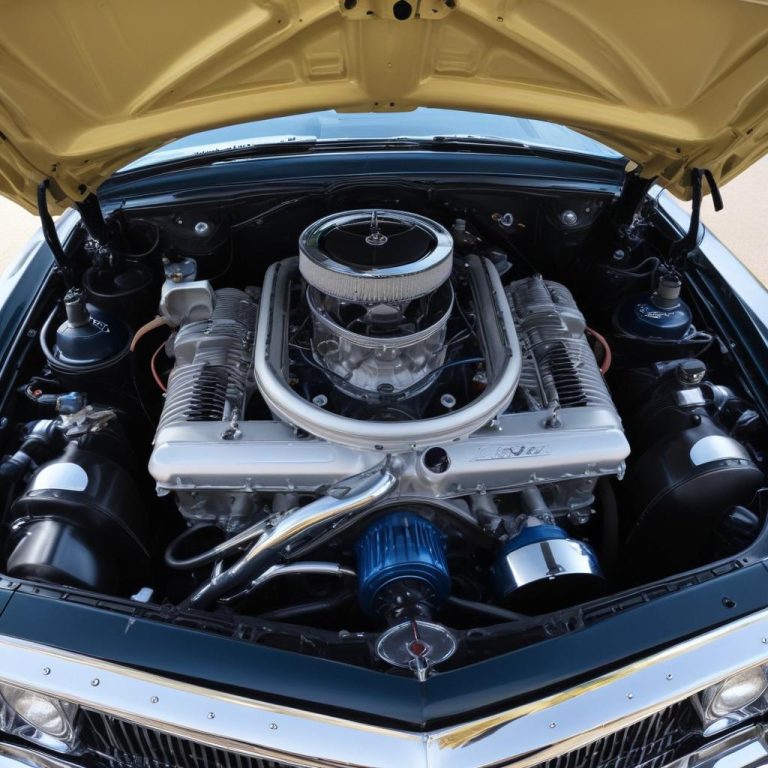
Let’s get under the hood of the 3.8-liter LC2 V6—the heart of the 1984–1987 Grand National—and understand why it wasn’t just another American engine.
Sequential Fuel Injection: By 1984, Buick had abandoned carburetors entirely. The LC2 used multi-port sequential injection—each injector fired individually, timed to the intake valve opening. This wasn’t just cleaner; it was more powerful and more responsive than the batch-fire systems on most competitors .
Distributorless Ignition: No mechanical distributor. No rotor. No cap. Computer-controlled coil ignition (CCCI) with a crank position sensor meant timing was precise, adjustable, and never drifted. This was Corvette-level tech in a Regal .
Turbocharger placement: For 1984, Buick moved the turbo to the rear of the engine. Hotter gases, better spool, more power. The wastegate was electronically controlled—closed-loop feedback from the ECM .
The intercooler (1986–1987): The single biggest performance jump. Garrett air-to-air intercooler mounted between the turbo and throttle body. Denser air, higher boost (14–15 psi), no detonation. Power jumped 35 hp overnight .
The bottom end: Forged pistons, nodular iron crank, four-bolt mains. Buick overbuilt this engine because they knew hot-rodders would push it. They were right .
One 1986 owner put it simply: “The engine remains a technological marvel, but like anything mechanical, it benefits greatly from TLC.” Translation: treat it right, it’ll treat you right .
The GNX: McLaren’s Secret Handshake
Here’s where the story gets almost mythical.
1987. Buick knows the rear-wheel-drive Regal platform is dead. The 1988 model will be front-drive. The turbo V6 program has maybe one year left. Lloyd Reuss has moved on to run GM’s North American operations, but his son Mark is a young engineer in Arizona, secretly working after hours on a “grenade chip” that might blow the engine but also might set a drag strip record .
Enter ASC/McLaren. Buick contracts American Sunroof Company (ASC) and McLaren Engines to create a send-off special. Not a sticker package—genuine engineering. Only 547 cars will be built, each one pulled from the regular Grand National line and sent to a separate facility for hand assembly .
What McLaren changed:
- Ceramic turbo impeller: Lighter than steel, spooled faster, reduced turbo lag noticeably
- Enlarged turbo exhaust housing: Better flow, higher peak boost
- Low-restriction dual mufflers: Less backpressure, sinister sound
- Reprogrammed ECU: More aggressive spark and fuel curves
- Transmission cooler: Standard, not optional
- Rear torque arm: Reduced axle hop during hard launches
- Aluminum rear diffuser cover: Better heat dissipation
- 16-inch black mesh wheels (Grand National had 15-inch chromed steel)
- Subtle fender flares to cover wider tires
- Rear spoiler slightly larger than stock
- Dashboard plaque with individual serial number
The power lie: Buick officially rated the GNX at 276 hp and 360 lb-ft. Everyone involved knew this was fiction. Independent testing showed 300+ hp and nearly 400 lb-ft. Why lie? Because the Corvette made 240 hp, and GM’s flagship sports car couldn’t be seen losing to a Buick. But it did. Every day .
Mark Reuss remembers: “When you drive one, even now, it’s frighteningly fast from 0-60. But it isn’t bad at all, ride and handling-wise—it still rides like a Buick. You can drive it all day on the highway. It’s very nice to drive… all the comforts, like air conditioning, T-tops, concert sound, power seats, power antenna if you remember those… it was a fully loaded Buick. But brutal. In the best way” .
Chart: Grand National & GNX Performance Evolution
Note: 1978 figure is 4-bbl version. GNX actual power estimated significantly higher than official ratings .
The Competition: When a Buick Embarassed Supercars
Here’s the part that still makes Ferrari owners cringe.
1987 Buick GNX:
- 0-60 mph: 4.7 seconds (Car and Driver)
- Quarter-mile: 13.4 seconds @ 104 mph
- Power-to-weight: Approximately 1 hp per 10.5 lbs
1987 Ferrari Testarossa:
- 0-60 mph: 5.0 seconds
- Quarter-mile: 13.5 seconds @ 107 mph
- Price: ~$100,000
1987 Porsche 911 Turbo:
- 0-60 mph: 4.6 seconds
- Quarter-mile: 13.2 seconds @ 105 mph
- Price: ~$50,000
1987 Chevrolet Corvette:
- 0-60 mph: 5.8 seconds
- Quarter-mile: 14.2 seconds @ 97 mph
- Price: ~$35,000
A Buick Regal—a car designed for middle managers and retirement communities—was beating Ferrari, matching Porsche, and absolutely humiliating Chevrolet’s flagship sports car.
GM’s reaction: According to multiple sources, Corvette engineers were furious. Upper management was embarrassed. The GNX program was never officially punished, but the message was clear: don’t let this happen again. The front-drive 1988 Regal ensured it wouldn’t .
Production Numbers: How Rare Is Yours?
Grand National (1984–1987):
- 1984: 2,000
- 1985: 2,102
- 1986: 5,512
- 1987: 20,192
- Total: 29,806
GNX (1987):
- 547 units
Turbo Regal T-Type (1983–1987): Thousands more, exact figures elusive.
How to spot a real GN:
- Trunk ID label: Code “WE2” is the proof. VIN alone does not identify a Grand National .
- 1986 vs 1987: 1986 has chrome strip across top of grille with “BUICK” embossed; 1987 grille is all black .
- Interior: 1986 has black door pulls; 1987 has gray door pulls .
- Engine VIN code: 1986 = “9”, 1987 = “7” (eighth character) .
How to spot a real GNX:
- Dash plaque with serial number (#001 in GM Heritage collection)
- 16-inch mesh wheels (GN had 15-inch chromed steel)
- Fender vents
- Wider rear fenders
- Rear seat brace
- Torque bar visible under rear
What Breaks: The Grand National Owner’s Reality
These cars are nearly 40 years old. Even the good ones need attention.
Fuel pump: Factory pump is undersupplied with voltage. Direct-wiring to the alternator is a common, recommended retrofit .
Valve springs: GM recommended replacement around 65,000 miles. If you buy a high-mileage GN and hear valve float, budget for head work .
Oil cooler lines: Prone to leakage. Replace proactively .
Oil changes: GM said 7,500-mile intervals. Do not follow this. 2,500–3,000 miles with quality synthetic is the enthusiast standard .
Body bushings: The G-body frame and body work together structurally. Original bushings compress and deteriorate. Replacing all mounting points (not just GM’s selective few) dramatically improves rigidity .
Door jamb cracks: Especially on T-top cars. Stress cracks below the A-pillar are common. Inspect carefully .
Window fit: Notoriously poor but adjustable .
Cooling ducts: The plastic baffles between inner fenders and radiator/intercooler are often missing. They’re important for directing airflow. Replace them .
The 2024–2025 Revival: Kendrick Lamar and the Super Bowl
Here’s the wildest plot twist in the Grand National’s 40-year story.
November 2024: Kendrick Lamar releases his sixth studio album. Title: GNX. Cover art: a black Buick Grand National, hood up, engine bay glowing .
February 9, 2025: Super Bowl LIX halftime show. Kendrick performs. Midway through the set, a black GNX rises from below the stage. Dancers emerge from inside. The car is an authentic 1987 GNX, purchased from a California dealership and gutted specifically for this performance .
The reaction: A generation that wasn’t alive when the GNX was new suddenly Googles “Buick GNX.” Values spike. Forum traffic explodes. Buick’s own president, Mark Reuss, issues a statement remembering his father and his own work on the development car .
One enthusiast wrote: “The GNX has become a symbol of the ’80s, a representation of a period when the automaker still had the guts to go all-in on speed and style” .
Modern Monsters: 1,200–1,600 HP and the Limits of “Original”
The Grand National platform has become a favorite canvas for high-end restomod builders. Two builds define the extremes.
Ringbrothers “INVADR” (2024)
Philosophy: Respect the V6. Maximize it.
Engine: Duttweiler Performance 3.8L V6, all-aluminum block, six-bolt mains, billet Bryant Racing crankshaft, custom hand-ported Stage 1 aluminum heads, bespoke intake manifold.
Turbo system: Twin Precision GEN2 62mm mirrored-image reverse-rotation turbos.
Boost: 32 psi (daily tune), 50 psi potential.
Power: 1,246 hp to the rear wheels on E85 (daily). 2,000 hp potential at max boost .
Transmission: Bowler Tremec T56 Magnum six-speed manual.
Chassis: Custom Roadster Shop Fast Track Stage III with four-link rear, Penske three-way adjustable shocks.
Brakes: Brembo carbon-ceramic, 6-piston front, 4-piston rear.
Weight savings: Carbon-fiber hood scoop, carbon-fiber decklid spoiler, carbon-fiber mirrors.
Paint: BASF Glasurit “Dark Vader Gray” .
Build time: 4,900 hours .
Roadster Shop Grand National (2022)
Philosophy: What if Buick had built a twin-turbo V8 version?
Engine: Dart iron-block 427ci LS7, twin Precision 64/66 turbos.
Power: 1,504 hp on E98, 1,100 hp on 93-octane pump gas .
Transmission: Bowler 4L80E full-manual valvebody.
Chassis: Roadster Shop Fast Track IRS with custom 25-gallon fuel tank, triple Walbro pumps.
Tech: Holley Dominator ECU, four user-selectable tune maps, CANBUS solid-state electrical system, 3D-printed dash with retro-modern display .
What these builds prove: The Grand National wasn’t just a car. It was a proof of concept. A 3.8-liter V6 could be the foundation for 2,000 hp. A G-body could handle modern chassis engineering. And black paint never goes out of style .
FAQ: Your Buick Grand National Turbo V6 Questions, Answered
What makes the Grand National’s V6 so special?
It was America’s first turbocharged, intercooled, sequential-fuel-injected, distributorless-ignition production V6. In 1984. This was Corvette and Porsche technology in a midsize Buick .
How much horsepower did the GNX really make?
Officially: 276. Actually: ~300–315. Buick underrated it to avoid embarrassing the Corvette. Contemporary dyno testing and road tests confirm the real numbers .
Why did Buick stop making the Grand National?
Platform change. The Regal moved to front-wheel drive for 1988. The rear-drive G-body chassis was retired. Buick chose not to develop a new performance variant for the FWD platform .
Is the Grand National the fastest American car of the 1980s?
Yes, in a straight line. The GNX was quicker 0-60 and in the quarter-mile than any contemporary Mustang, Camaro, or Corvette. Only the Porsche 911 Turbo matched or slightly exceeded it .
What’s the difference between a Grand National and a GNX?
The GNX is a heavily modified Grand National—ceramic turbo, enlarged exhaust, reprogrammed ECU, suspension upgrades, fender flares, 16-inch wheels, and only 547 built. It’s the ultimate expression of the platform .
How many Grand Nationals were made?
29,806 total (1984–1987). Plus 547 GNXs. Plus thousands of mechanically similar Turbo Regal T-Types .
Why is Kendrick Lamar’s album called GNX?
The rapper is a known car enthusiast and owns a Buick Grand National. The album cover features his car. The Super Bowl halftime show featured a GNX on stage. It’s a tribute to an icon .
Can I daily drive a Grand National?
Yes, with caveats. They’re 40-year-old cars. They require attentive maintenance, upgraded fuel pump wiring, and proactive valve spring replacement. But they were fully equipped luxury coupes with air conditioning, power seats, and decent highway manners .
What’s a Grand National worth today?
Good 1986–1987 examples: $35,000–$60,000. Concours cars: $70,000+. GNX: $150,000–$250,000+ depending on mileage and originality. The 2024–2025 Kendrick effect has pushed values upward .
Should I buy a modified car or a survivor?
Survivors command premium prices, but modified cars are not frowned upon. Many owners upgraded fuel systems, turbochargers, and suspension because the platform responds so well to modifications. Documentation is everything .
The Verdict: Why the Grand National Still Matters
The Buick Grand National is proof that innovation doesn’t require a clean sheet of paper.
Buick didn’t invent turbocharging. They didn’t invent fuel injection or electronic ignition. But they took existing technology—some of it borrowed from aerospace, some from European sports cars, some from their own racing programs—and packaged it into a mass-production American coupe that didn’t look the part.
That’s the genius. That’s why we’re still talking about it forty years later.
The 1987 GNX is faster than a Ferrari Testarossa. It’s also a Regal with cloth seats and an 85-mph speedometer. It has air conditioning and power windows and a stereo that plays cassette tapes. It will embarrass a Corvette at the drag strip and then drive you to church on Sunday without complaining.
This is what Mark Reuss meant by “Fast With Class.” Not class as in luxury. Class as in composure. Class as in not needing to shout about how fast you are.
The Grand National doesn’t shout. It just pulls up next to you at a stoplight, black paint absorbing all the light in the vicinity, and waits. You hear the turbo spool. You see the boost gauge climb. And then the light turns green and you’re staring at tailpipes.
That’s the legend. That’s the car. That’s the V6 that killed the V8—and did it with the air conditioning running.
Which Grand National era captures your imagination—the underdog 1984–1985 cars that started it all, the intercooled 1986–1987 beasts, the mythical GNX, or the 1,200-hp modern restomods? Drop a comment and tell us about the black Buick that made you a believer.
References:
- Buick Grand National — Wikipédia
- MotorTrend: Roadster Shop’s 1,500-HP Twin-Turbo 1987 Buick Grand National (2022 SEMA)
- Yahoo Autos: Buick Grand National GNX Revival – Camaro Replacement? (Nov 2025)
- Hemmings: 1986-’87 Buick Grand National Buyer’s Guide
- MotorTrend: The Buick Grand National and GNX Cut a Deep, Dark Path Through GM Muscle Car History
- Barn Finds: Motorless! 1986 Buick Grand National
- CarBuzz: 1,600-HP Buick Grand National Is Top-Rank Sleeper Classic
- GM News: Mark Reuss, the big game, and the story of the Buick GNX (Feb 2025)
- Roadkill: What Is a Grand National and Why Is It So Fast? The Story Behind Buick’s Intercooled Turbocharged LC2 V-6!
- Street Machine: Twin-turbo V6 Buick Grand National ‘INVADR’ – Ringbrothers SEMA 2024