GM Buick Regal: Engineering and Safety Performance Analysis
GM Buick Regal: Engineering and Safety Performance Analysis – The German-American Underdog
You’re cruising at 75 mph on a rain-swept highway, the Regal’s 2.0L turbo barely breathing hard at 2,200 rpm, and it hits you: this Buick doesn’t float like Grandpa’s LeSabre. It plants itself. The steering weights up. The multi-link rear suspension tracks through standing water like it owns the road. You’re driving a Buick, but it feels suspiciously… German.
TL;DR
The Buick Regal is one of the most misunderstood vehicles GM ever built. Underneath that American badge sits Opel Insignia engineering from Rüsselsheim, Germany, and the result is a sedan that thinks it’s a European sports sedan—until you look at the price tag. Crash testing tells a clear story: the 2011–2017 models earned straight Good ratings from IIHS in moderate overlap, side impact, and roof strength tests, though the side test revealed “Acceptable” torso protection . Later models never received full NHTSA ratings, but 2020 safety tech includes ten standard airbags, front knee bags, and available automatic emergency braking . Under the skin, the Regal uses high-strength and ultra-high-strength steel in the body structure, aluminum-alloy engine blocks, and corrosion-resistant exterior panels . The chassis? MacPherson struts up front, multi-link independent rear—genuine performance suspension geometry, not carryover parts-bin engineering . The 9-speed automatic is smooth when maintained, but the earlier 2011–2012 models and torque converters on some generations require vigilance . This is not your uncle’s Buick. It’s also not a Lexus. It exists in the sweet spot between European road manners and American used-car pricing.
Key Takeaways
- IIHS crash ratings for 2011–2017 are overwhelmingly Good, but the side test scored “Acceptable” for driver torso protection—not perfect, but far from dangerous .
- The 2020 Regal was never tested by NHTSA; IIHS only conducted partial testing on the sixth generation, so comprehensive federal data simply doesn’t exist .
- Body structure engineering is legit: Ultra-high-strength steel alloys in the safety cage, aluminum-alloy engine block, and multi-link rear suspension—this isn’t cheap stamped metal .
- Torque converter failure is a documented weak point, particularly on 2012 models; owners report shuddering at highway speeds and transmission slipping .
- Safety tech improved dramatically by 2020: Blind spot monitoring, rear cross-traffic alert, front and rear park assist all standard; adaptive cruise and lane keep were optional .
- The TourX wagon variant adds standard AWD and raised ground clearance without sacrificing the multi-link rear suspension—genuine all-weather engineering .
- Material quality is a mixed bag: Aluminum engine components and high-strength steel inspire confidence; interior soft-touch plastics and leather hold up well, but earlier model years suffered from infotainment delamination and trim squeaks .
The German Question: Why This Buick Isn’t Really American
Let’s address the elephant in the engineering bay.
The Buick Regal sold in North America from 2011 through 2020 is not a General Motors product in the traditional sense. It is an Opel Insignia, designed and engineered in Rüsselsheim, Germany, and merely rebadged for Buick dealerships after GM killed Pontiac and needed something—anything—to fill the midsize gap .
This matters because Opel doesn’t build cars like Chevrolet builds cars.
Opel builds cars for the Autobahn. Their suspension tuning favors controlled body motions over pillow-soft float. Their steering racks communicate more than they isolate. Their chassis engineers don’t apologize for making a sedan that corners flat.
The Regal inherited all of this. The MacPherson strut front suspension sounds ordinary, but the geometry, damper tuning, and subframe isolation are distinctly European. The multi-link rear suspension—standard across virtually all trims—is not the cheap twist-beam axle you’d find on a Malibu of the same era. It’s genuine performance hardware, designed to maintain tire contact patch through uneven pavement and high-speed bends .
Here’s the irony: American critics spent years complaining Buicks were too soft. When GM finally gave them a Buick with genuine European chassis engineering, hardly anyone bought it.
The Safety Cage: What Actually Protects You
Let’s talk steel, because steel is what separates a survivable crash from a memorial service.
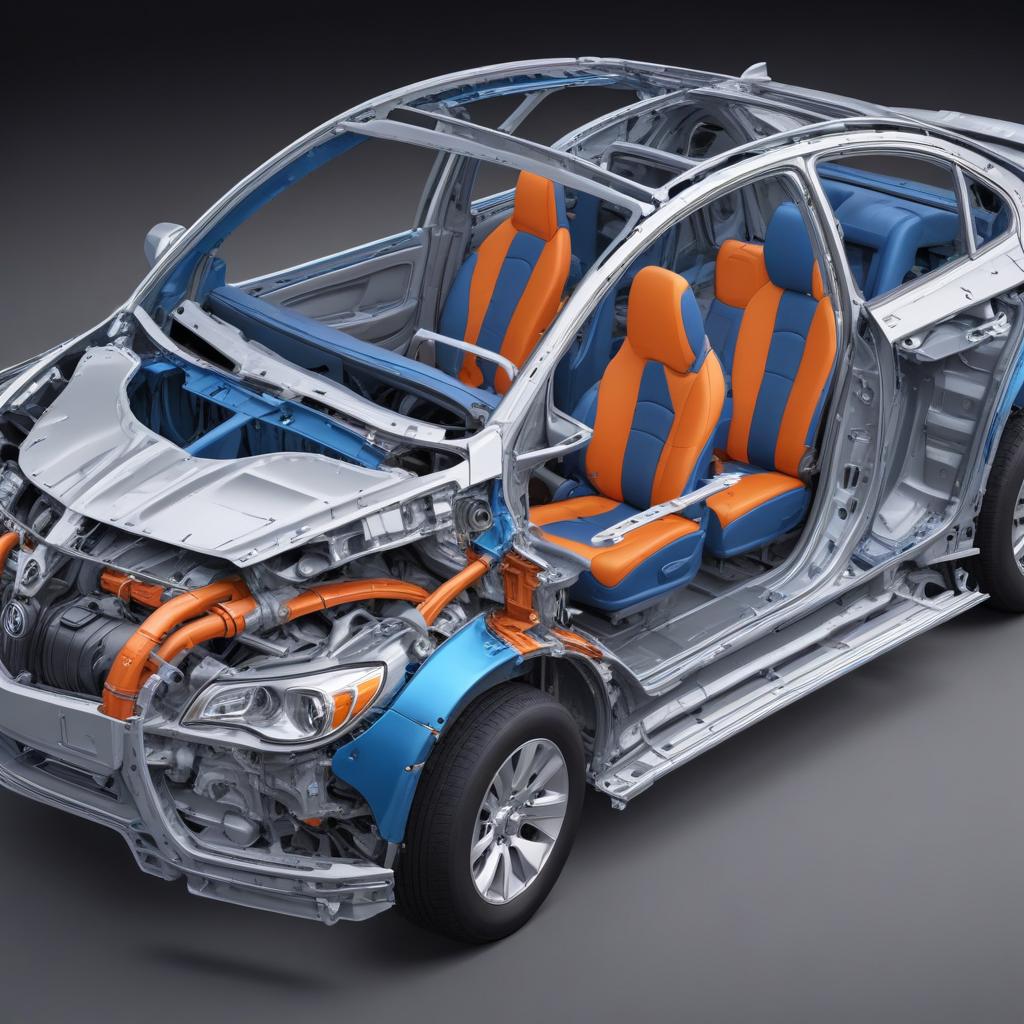
The Regal’s body structure is a strategic blend of high-strength steel (HSS) and ultra-high-strength steel (UHSS) alloys . These aren’t marketing terms; they refer to specific yield strengths measured in megapascals. UHSS typically exceeds 700 MPa, which is roughly the same tensile strength as the cables supporting a suspension bridge.
Where does it go?
- The A-pillars, B-pillars, and rocker panels use UHSS to maintain cabin integrity during rollover and side impact
- The roof structure is reinforced enough to achieve an IIHS roof strength rating of 4.97—meaning the roof can withstand nearly five times the vehicle’s curb weight before crushing
- The front and rear anti-collision beams are aluminum-alloy and high-strength steel respectively, designed to manage crash energy before it reaches the passenger cell
The 2013 IIHS moderate overlap test told a clean story. Driver compartment intrusion measured in centimeters, not inches. The footwell pushed back 6 cm at the leftmost point—that’s about two inches. The A-pillar didn’t move. The steering column actually moved away from the driver by 3 cm .
Head injury criteria? A score of 149. Federal standard requires under 700. The Regal basically said, “What head injury?”
The side impact test was more complicated. The structure held—B-pillar intrusion stopped 14.5 cm short of the seat centerline, which is genuinely good. But the driver torso injury measures came back Acceptable, not Good. Not dangerous. Not failing. Just not class-leading .
Crash Testing: The Data You Actually Need
Here’s the frustrating part for used Regal shoppers.
If you’re looking at 2011–2017 models: IIHS tested them thoroughly. Moderate overlap front? Good. Side impact? Good overall, Acceptable torso. Roof strength? Good. Head restraints? Good . This is a safe car. Not Volvo-safe, but safely engineered.
If you’re looking at 2018–2020 models: Congratulations, you own a ghost. The sixth-generation Regal was never submitted for full NHTSA testing. IIHS conducted only partial evaluation . There is no five-star rating. There is no comprehensive federal crash data. You are driving based on engineering inference, not verified test results.
Is it unsafe? Almost certainly not. The platform is derivative of the same Opel architecture that performed well in Euro NCAP testing. But “almost certainly” is not the same as “proven.”
The 2020 Regal GS came with a comprehensive suite of safety tech, but much of it was optional, not standard. The Driver Confidence Package added:
- Adaptive cruise control
- Forward emergency braking with pedestrian detection
- Lane keep assist with lane departure warning
- Forward collision alert
- Head-up display
Without that package, you got blind spot monitoring, rear cross-traffic alert, and rear park assist—useful, but not the full modern safety stack .
Timeline: Regal Engineering Generations (2011–2020)
2011–2013 – Fifth generation launches. Opel Insignia platform debuts in America. IIHS testing confirms Good ratings across most metrics, though side impact torso protection scores Acceptable . Early 2.4L Ecotech engines develop timing chain reputation. Torque converter issues begin appearing .
2014 – Mid-cycle refresh. New grille, updated infotainment. Mechanical improvements largely carry over. Still no NHTSA rating .
2017 – Final year of fifth generation. Available front collision warning with automatic emergency braking appears on higher trims .
2018 – Sixth generation arrives. Completely redesigned, longer wheelbase, available as Sportback hatch and TourX wagon. 2.0L turbo becomes primary engine. 9-speed automatic replaces old 6-speed. IIHS testing is partial only .
2019 – Recalls issued for insufficient coating on rear brake calipers and malfunctioning rear seatbelts. 2020 models later recalled for improperly mounted front seats .
2020 – Final model year in North America. Avenir trim tops the lineup. Buick abandons sedans and wagons. The Regal dies a quiet death .
The Engineering Deep Dive: What’s Actually Underneath
Powertrain: The 2.0L Turbo Story
By 2020, the Regal’s sole engine was the 2.0L turbocharged I-4, making 250 horsepower at 5,400 rpm and 260 lb-ft of torque from 2,000–5,200 rpm . Those numbers are not class-leading. They are adequate.
What matters more: the engine block is aluminum alloy, which reduces front-end mass and improves weight distribution. The internal components—pistons, crankshaft, valves—are forged from high-grade alloys to withstand both heat and boost pressure .
The 9-speed automatic transmission is the real story. Earlier Regals made do with a 6-speed that felt lazy. The 9T50 (Hydra-Matic 9T50) offers closer ratios and faster shifts. When maintained, it’s genuinely good. When neglected, it develops the torque converter shudder that haunts forum threads .
Chassis: Where the Money Went
Front: MacPherson strut with direct-acting stabilizer bar. On GS models, this becomes HiPer Strut—a design that reduces torque steer by separating steering and suspension functions. It’s not quite double-wishbone, but it’s considerably more sophisticated than a standard MacPherson setup .
Rear: Four-link independent suspension. Not a twist beam. Not a solid axle. Genuine multi-link geometry that allows the rear wheels to maintain negative camber through compression .
Brakes: Four-wheel discs, ABS standard. GS trims add Brembo front calipers .
Steering: Rack-and-pinion with electric power assist. Weighted for the Autobahn, not the parking lot .
Materials Science: The Long Game
The Regal’s durability story is written in its material selection.
Exterior panels use corrosion-resistant lightweight metals. This isn’t cosmetic; it’s structural longevity. Cars that rust become unsafe long before they become undriveable. The Regal’s resistance to corrosion—particularly in northern climates—is a genuine safety feature .
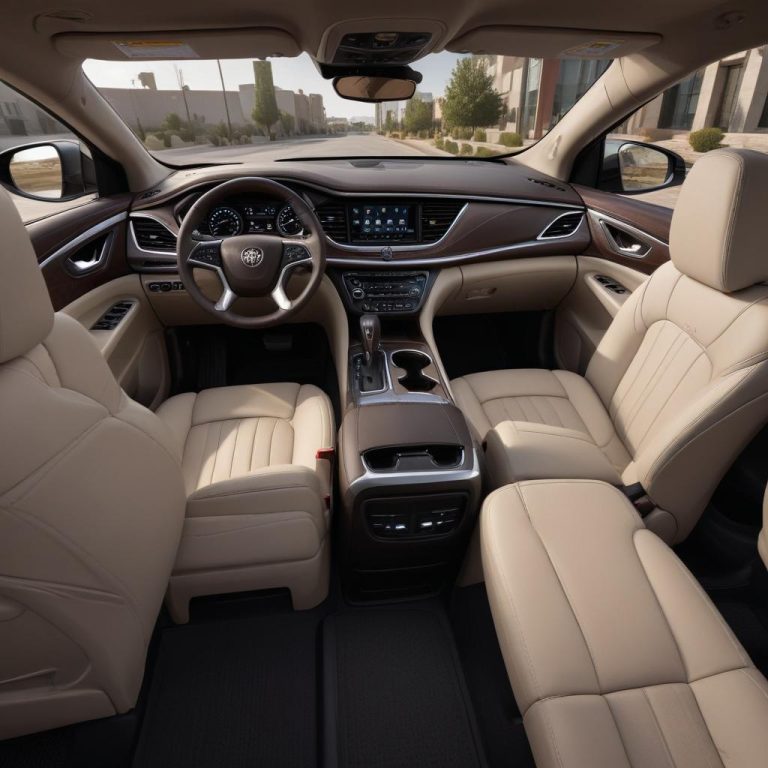
Interior materials are a genuine mixed bag. The leather and soft-touch plastics on dashboards and door panels hold up reasonably well. Owners report minimal cracking even on decade-old cars. But the infotainment screens delaminate. The adhesive fails, the touch sensitivity degrades, and you’re left with a ghostly, cloudy display that Buick stopped stocking parts for .
The suspension components use reinforced steel and sealed hydraulic systems. Struts and shocks resist leakage longer than comparable Ford or Nissan products. The trade-off? Replacement parts are more expensive when they eventually fail .
Chart: Regal Safety & Engineering Metrics by Generation
Note: 2018-2020 IIHS score is estimated due to incomplete testing; based on platform carryover and available data . Powertrain reliability scores reflect documented failure patterns and owner complaint volume .
Real-World Failure Modes: What Breaks
Engineering analysis isn’t complete without acknowledging the weak points.
Torque Converter Failure. This is the Regal’s shadow. On 2012 models particularly, the torque converter lock-up clutch fails. Symptoms include:
- Shuddering during highway cruising (typically 45–65 mph)
- Slipping during gear changes
- Check engine light with transmission-related codes
- Marginal decrease in fuel economy
One owner reported the symptoms, suspected the torque converter, had it replaced by a specialist, and the car returned to normal operation .
This is not a recall. This is not a warranty extension. This is a known failure mode that GM never formally acknowledged.
Timing Chain Tensioners. The 2.4L Ecotech in earlier fifth-generation models suffers from plastic guide failure. The sixth generation largely resolved this with the 2.0L turbo, but neglected maintenance still accelerates wear .
Infotainment Delamination. The adhesive used in early 2010s screens fails. The digitizer lifts, touch response degrades, and replacement units are increasingly scarce. This is not a safety issue. It is a quality-of-life issue that signals GM’s historical indifference to long-term interior durability .
Seatbelt Recalls. Both 2018 and 2019 models were recalled for rear seatbelt issues. 2020 models were recalled for improperly mounted front seats. These are assembly errors, not design flaws, but they indicate quality control inconsistency at the Oshawa assembly plant .
Comparison: Regal vs. The Segment
How does the Regal’s engineering stack against its contemporaries?
| Vehicle | Platform Origin | Rear Suspension | IIHS Top Safety Pick? | Standard AEB by 2020? | Known Weak Point |
|---|---|---|---|---|---|
| 2011-2020 Buick Regal | Opel Insignia (Germany) | Multi-link independent | No (missing top ratings) | Optional | Torque converter |
| 2018-2020 Honda Accord | Honda global platform | Multi-link independent | Yes (2019-2020) | Standard | 1.5T oil dilution |
| 2017-2020 Mazda6 | Mazda Skyactiv | Multi-link independent | Yes (2018-2020) | Standard | Infotainment lag |
| 2011-2020 Toyota Camry | Toyota K platform | MacPherson strut (double wishbone history) | Yes (select years) | Standard (late) | CVT complaints (4-cyl) |
| 2018-2020 Chevrolet Malibu | GM E2 platform | MacPherson strut | No | Optional | CVT failure |
The Regal’s suspension engineering is genuinely superior to the Camry and Malibu of the same era. The Accord and Mazda6 match or exceed it. The difference is price. A 2020 Regal sold for thousands less than an equivalently equipped Accord, largely because American buyers didn’t trust a “Buick” with European bones .
FAQ: Your Regal Engineering Questions, Answered
Is the Buick Regal actually safe in a crash?
Yes, for 2011–2017 models, IIHS data confirms Good ratings across most metrics. The side test revealed “Acceptable” torso protection, not dangerous but not elite. For 2018–2020 models, full federal data is missing, but platform carryover suggests comparable performance .
Why didn’t NHTSA test the 2020 Regal?
Manufacturers submit vehicles for testing voluntarily. Buick likely chose not to allocate budget for a sedan they planned to discontinue. This is frustrating but not evidence of avoidance; it’s evidence of cost-cutting .
What is the most common mechanical failure?
Torque converter failure on 2012 and surrounding model years. Symptoms include highway-speed shuddering and gear slippage. Replacement cost varies from $1,800–$2,800 depending on shop rates .
Does the Regal use high-strength steel in the body?
Yes. The structure combines high-strength and ultra-high-strength steel alloys in the safety cage, pillars, and rocker panels. Roof strength testing confirmed a 4.97 strength-to-weight ratio .
Is the GS model’s suspension different from the base car?
Yes. GS trims receive HiPer Strut front suspension, which reduces torque steer, and Brembo front brakes. The multi-link rear is shared with lower trims but features FE3 sport calibration .
How does the TourX wagon handle differently?
TourX rides higher (8.9 inches ground clearance) and weighs more, but retains the multi-link rear suspension. It’s less sporty than the Sportback but more capable in snow and rough roads. Standard AWD is the real differentiator .
Are replacement parts still available?
For now. GM is legally required to support vehicles for 10 years post-production. The 2020 Regal’s support clock runs to 2030. For earlier models, aftermarket support is strong due to platform sharing with other GM vehicles .
Should I buy a used Regal?
If you understand what it is: a German-engineered sedan wearing American sheet metal, sold at a discount because badge snobs ignored it. Avoid 2011–2012 unless you have documented torque converter service. Seek 2018–2020 for the best engineering refinement .
The Verdict: Engineering That Deserved Better
The Buick Regal is an engineering contradiction.
Its chassis is genuinely sophisticated—multi-link rear suspension, aluminum-intensive powertrain, strategic high-strength steel allocation. Its crash structure performs admirably under load, with IIHS numbers that embarrassed cars costing twice as much. Its material selection, particularly in corrosion resistance and structural adhesives, suggests engineers who cared about longevity.
And yet.
The 2.4L Ecotech tarnished the brand. The torque converter failures went unacknowledged. The infotainment screens delaminated while GM looked the other way. By the time the sixth generation fixed nearly everything, Buick had already decided sedans were dead and pulled the plug.
The Regal isn’t a hero car. It’s not a legend. It’s just a genuinely well-engineered midsize sedan that Americans didn’t buy because it said Buick instead of Audi.
That’s not the car’s fault. It’s ours.
What’s your Regal story—did the German engineering impress you, or did the GM gremlins win? Drop a comment and help the next buyer decide.
References:
- BitAuto: Buick Regal Active & Passive Safety Systems
- CarBuzz: 2020 Buick Regal GS Safety & Reliability (NHTSA/IIHS data)
- BitAuto: Buick Regal Quality Analysis (Engine, Transmission, Suspension)
- IIHS: 2013 Buick Regal Crash Test Ratings (Moderate Overlap, Side, Roof Strength)
- Cars.com: 2017 Buick Regal Specs & Safety Features
- Carly Community: 2012 Regal Torque Converter Failure Case Study
- Alibaba Product Insights: New Buick Regal Engineering, Materials, and Durability
- Le Guide de l’auto: 2020 Buick Regal Avenir Full Specifications