Why the 1965 Buick Riviera Gran Sport is a Million-Dollar Design Icon
The first time you see a 1965 Buick Riviera Gran Sport in person, you stop and stare—and that’s exactly what Bill Mitchell intended.
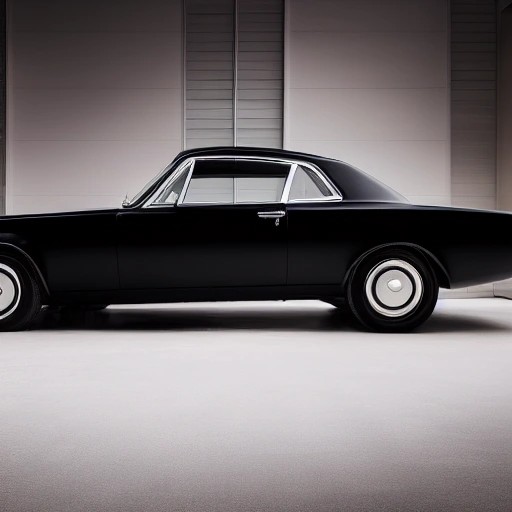
You notice the sleek roofline first, then your eyes follow the dramatic “Coke-bottle” curves down the sides. The hidden headlights sit behind sleek clamshell doors, waiting to reveal themselves. This car doesn’t just look expensive—it looks like it belongs in a museum. And sometimes, it does.
The 1965 Buick Riviera Gran Sport represents the perfect storm of American automotive design. It combines stunning styling from one of GM’s greatest designers, serious performance upgrades, and extreme rarity. Today, pristine examples command six-figure prices at auction, with some crossing the quarter-million-dollar mark. Here is why this car has become a million-dollar design icon.
TL;DR
The 1965 Buick Riviera Gran Sport is a design masterpiece created by GM styling chief Bill Mitchell. It features one-year-only hidden “clamshell” headlights, dramatic Coke-bottle styling, and a powerful 425ci “Nailhead” V8 with dual four-barrel carburetors producing 360 horsepower. Only 3,354 Gran Sport examples were built, making them highly collectible. Today, these cars regularly sell for six figures at auction, with top examples exceeding $250,000. The car represents the pinnacle of 1960s American luxury performance design.
Key Takeaways
- Designed by Bill Mitchell, GM’s legendary styling chief, who envisioned a “cross between a Ferrari and a Rolls-Royce” .
- Only 3,354 Gran Sport models were built in 1965, making them highly sought-after by collectors .
- Hidden “clamshell” headlights were a one-year-only feature, adding to the car’s exclusivity and visual drama .
- Powered by a 425ci “Nailhead” V8 with dual four-barrel carburetors, producing 360 horsepower and 465 lb-ft of torque .
- Top auction prices for pristine examples have reached £242,698 (approximately $300,000 USD) .
- The “GS” badge that Buick enthusiasts know today originated with this 1965 Riviera Gran Sport .
The Man Behind the Masterpiece: Bill Mitchell
The Riviera’s stunning design came from the mind of Bill Mitchell, GM’s vice president of styling from 1958 to 1977. Mitchell was the successor to Harley Earl, the man who essentially invented automotive design as a profession. But Mitchell had his own vision.
When Buick’s general manager Ed Rollert approached Mitchell for a new model, Rollert made a crucial promise: he would not alter Mitchell’s design sketches. This was unusual—GM divisions typically fought over styling changes. Mitchell had originally created the “La Salle” design sketches for another project, but Rollert convinced him that Buick was the perfect home for the car .
Mitchell drew inspiration from the coachbuilt cars he had seen on trips to Europe. He wanted the Riviera to have the elegance of a Rolls-Royce combined with the performance of a Ferrari . The result was a dramatic departure from Buick’s more conservative styling of the period .
The production Riviera’s body shell was unique to the model—unusual for a GM product at the time. The car rode on a cruciform frame that was shorter and narrower than other Buicks, with a 117-inch wheelbase . This gave the Riviera a more athletic stance than its full-size siblings.
The One-Year-Only Clamshell Headlights
The 1965 Riviera’s most distinctive design feature is its hidden headlights. The quad headlamps are concealed behind sleek “clamshell” doors that sit in the leading edges of each front fender . When you turn on the lights, the doors open electrically to reveal stacked headlights.
This design was actually intended for the 1963 Riviera, but GM engineers killed the idea due to cost and development time . Mitchell got his way for the 1965 model year, making it a one-year-only feature.
It is a fascinating fact that when the 1965 Rivieras left the factory, they had only one headlamp door relay. A recall was issued later in the model year, and dealers installed a second relay to improve reliability .
The clamshell headlights weren’t the only styling change for 1965. The non-functional side scoops between the doors and rear wheel arches were removed. The taillights moved from the body into the rear bumper for a cleaner look . The vinyl roof became available as an option for the first time, initially offered only in black .
These changes created one of the most complete and notable American automotive designs in history . The 1965 Riviera is widely considered the best-looking of the first-generation cars.
The Gran Sport Package: Performance to Match the Looks
Buick introduced the Gran Sport option for 1965, marking the first use of what would become one of Buick’s most celebrated performance badges .
Under the Hood: The Super Wildcat V8
The heart of the Gran Sport was the 425-cubic-inch “Nailhead” V8 engine, coded LX by Buick . The Nailhead got its nickname because of the shape and size of its valves and their configuration. The engine design actually dated back to 1953, but it was still stout in 1965.
The Gran Sport’s Super Wildcat version featured:
- Dual four-barrel Carter AFB carburetors delivering 600 cfm each
- 360 horsepower at 4,600 rpm
- 465 lb-ft of torque at just 2,800 rpm—that’s massive low-end grunt
- 10.25:1 compression ratio
- Special 2.25-inch dual exhaust with fewer bends to reduce backpressure
The 1965 425 engine also received updates including stronger webbing around the main bearings and tighter-sealing piston rings .
The Super Turbine 400 Transmission
The Gran Sport came with Buick’s Super Turbine 400 three-speed automatic transmission. Car and Driver magazine called it “without question, the best automatic transmission in the world” .
The transmission featured four pinions in each planetary gearset, versus the usual three, and included an aneroid bellows that automatically adjusted hydraulic pressure to compensate for altitude changes . The Gran Sport version also had a reinforced valve body and was recalibrated to shift at higher rpm.
Other Performance Upgrades
The Gran Sport package included:
- 3.42:1 rear axle ratio with limited-slip differential
- Larger diameter dual exhaust
- Heavy-duty suspension with stiffer springs and shocks
- Massive 12-inch finned-aluminum drum brakes—considered the best in the industry in their day
The brakes deserve special mention. Motor Trend noted that the Riviera’s “Al-Fin” brakes would “survive at least two more panic stops than other cars with cast-iron drums all-around.” Even when they did fade, they recovered in half the time of cast-iron drums .
Rarity and Collectibility
The 1965 Buick Riviera Gran Sport is a rare car. Out of 34,586 Rivieras built in 1965, only 3,354 were ordered with the Gran Sport package .
Today, these cars are highly collectible. Recent auction results show:
- A pristine example sold for $141,000
- Another sold for $121,000 at Gooding & Company
- A restored Gran Sport with matching numbers sold for $99,000
- The highest recorded sale reached £242,698 (approximately $300,000 USD)
Always verify that a car is a genuine Gran Sport, as there is no Gran Sport identifier in the VIN. Look for the “BS” metal tag on the transmission case and check for Gran Sport specific components .
The Legacy of the “GS”
The Gran Sport badge that debuted on the 1965 Riviera would go on to become one of Buick’s most famous performance designations . Today, Buick enthusiasts celebrate the GS name across multiple models, but it all started with this car .
Buick advertised the Gran Sport as “An iron fist in a velvet glove” . The car was capable of over 125 mph and delivered what Mitchell had always envisioned: a blend of European elegance and American muscle.
The Riviera remained in the Buick lineup through 1993, returning briefly from 1995 to 1999. But the first-generation cars—and especially the 1965 Gran Sport—are the ones that collectors treasure most.
Frequently Asked Questions
Why is the 1965 Buick Riviera Gran Sport so valuable?
Its combination of breathtaking Bill Mitchell design, one-year-only clamshell headlights, serious performance, and extreme rarity (only 3,354 built) makes it highly desirable to collectors. Top examples have sold for over $250,000.
What makes the 1965 Riviera Gran Sport special compared to other Rivieras?
The Gran Sport package added the 360-hp Super Wildcat V8 with dual four-barrel carburetors, special exhaust, limited-slip differential, and heavy-duty suspension. The 1965 model also has unique styling features including hidden clamshell headlights found only on this year.
How can I tell if a 1965 Riviera is a genuine Gran Sport?
Check for the “BS” metal tag on the transmission case. Look for Gran Sport specific components including the dual four-barrel carburetors, 2.25-inch exhaust system, and 3.42:1 limited-slip rear axle. The VIN does not identify Gran Sport cars.
What engine was in the 1965 Riviera Gran Sport?
It had a 425-cubic-inch “Nailhead” V8 with dual four-barrel Carter AFB carburetors, producing 360 horsepower and 465 lb-ft of torque.
Who designed the 1965 Buick Riviera?
GM styling chief Bill Mitchell designed the Riviera, drawing inspiration from European coachbuilt cars. He wanted a “cross between a Ferrari and a Rolls-Royce.”
How much did a 1965 Riviera Gran Sport cost new?
The factory price was $4,318. Typical delivered prices with options could run upward of $5,000.
Is the 1965 Riviera Gran Sport a muscle car?
Many consider it one of the most stylish muscle cars of the 1960s. It has the performance credentials but delivers them in a more refined, luxurious package than typical muscle cars.
Conclusion
The 1965 Buick Riviera Gran Sport is more than just a classic car. It is a rolling piece of art, a testament to Bill Mitchell’s design genius, and a symbol of an era when American automakers dared to create something truly special. Its combination of stunning looks, serious performance, and extreme rarity has cemented its place as one of the most collectible American cars of the 1960s.
Whether you are a Buick enthusiast, a classic car collector, or simply someone who appreciates beautiful design, the 1965 Riviera Gran Sport represents the pinnacle of American automotive art. It is a car that makes you stop and stare—and it always will.
Have you ever seen a 1965 Riviera Gran Sport in person? Share your experience in the comments.
For further reading: