History of the Buick Century Car: From 100 MPH to Family Favorite
The moment a 1955 Buick Century two-door sedan lit up the California Highway Patrol radar gun, it wasn’t just chasing speeders—it was proving that a banker’s hot rod could also be the family’s guardian angel, and that was the moment the Century stopped being just fast and started becoming unforgettable.
TL;DR
The Buick Century ran for nearly 70 years across three distinct lives. It began as a Depression-era speed demon built by mating a light body with a big engine—hitting 100 mph earned it the name “Century.” After World War II and a second performance-oriented run in the 1950s, the name went dormant. It roared back in 1973 as a mid-size family hauler and just kept going. For three decades, it evolved from a rear-drive V8 cruiser to a front-drive V6 commuter, quietly becoming the car millions of families trusted for school runs and highway vacations. It was never flashy. It was never the fastest. But from 1936 until 2005, the Century was Buick’s anchor—and it remains a used market steal for buyers who value low maintenance cost and everyday reliability over curb appeal.
Key Takeaways
- Born at 100 MPH: The 1936 Century got its name because British motorists called hitting 100 mph “doing the century.” It was Buick’s first production car to sustain that speed .
- Three Distinct Eras: Full-size performance car (1936–1942, 1954–1958), mid-size rear-drive family hauler (1973–1977), and front-drive commuter sedan/wagon (1978–2005) .
- The Banker’s Hot Rod: The original Century earned this nickname because it looked like a respectable sedan but outran almost everything on the road .
- Family Favorite Longevity: The final 1997–2005 generation shared parts with the Regal, seated six adults with a bench seat, and offered 175-horsepower V6 fuel economy that still holds up today .
- Used Market Gold: Late-model Centuries (1997–2005) sell for pocket change, share cheap GM mechanicals, and avoid the expensive electronic failures of modern cars.
The Evolution of Buick Century: Speed, Sense, and Staying Power
Let me tell you a story about a car that lived three completely different lives—and nailed every single one.
Most nameplates get one chance. Mustang is always a pony car. Corvette is always a sports car. But the Buick Century? It started as a Depression-era rocket ship, then turned into a 1950s Highway Patrol beast, then settled down, got sensible, and became the most trusted family sedan your grandparents ever owned.
And here is the wild part: every single version of the Century was exactly what Buick needed it to be at that moment.
Timeline: The Three Lives of the Buick Century
1936–1942THE BANKER’S HOT RODFull-size, rear-drive, 141-hp straight-8, 100+ mph top speed. Discontinued for WWII.
1954–1958THE HIGHWAY PATROL ICONV8 power, 4-door hardtop Riviera, California Highway Patrol fleets. Replaced by Invicta.
1973–1977COLONNADE CRUISERMid-size, rear-drive, A-body. Available with 455 V8. Replaced the Skylark.
1978–1996THE DOWNSIZING SURVIVORFront-drive, A-platform. Coupe, sedan, wagon. Turbo V6 (rare). Millions sold.
1997–2005THE FINAL FAMILY FAVORITEW-body sedan only, 3.1L/3.8L V6, bench seat, column shifter. 6-passenger comfort. Replaced by LaCrosse.
The Banker’s Hot Rod: When Buick Made Muscle (1936–1942)
Here is how you build a legend.
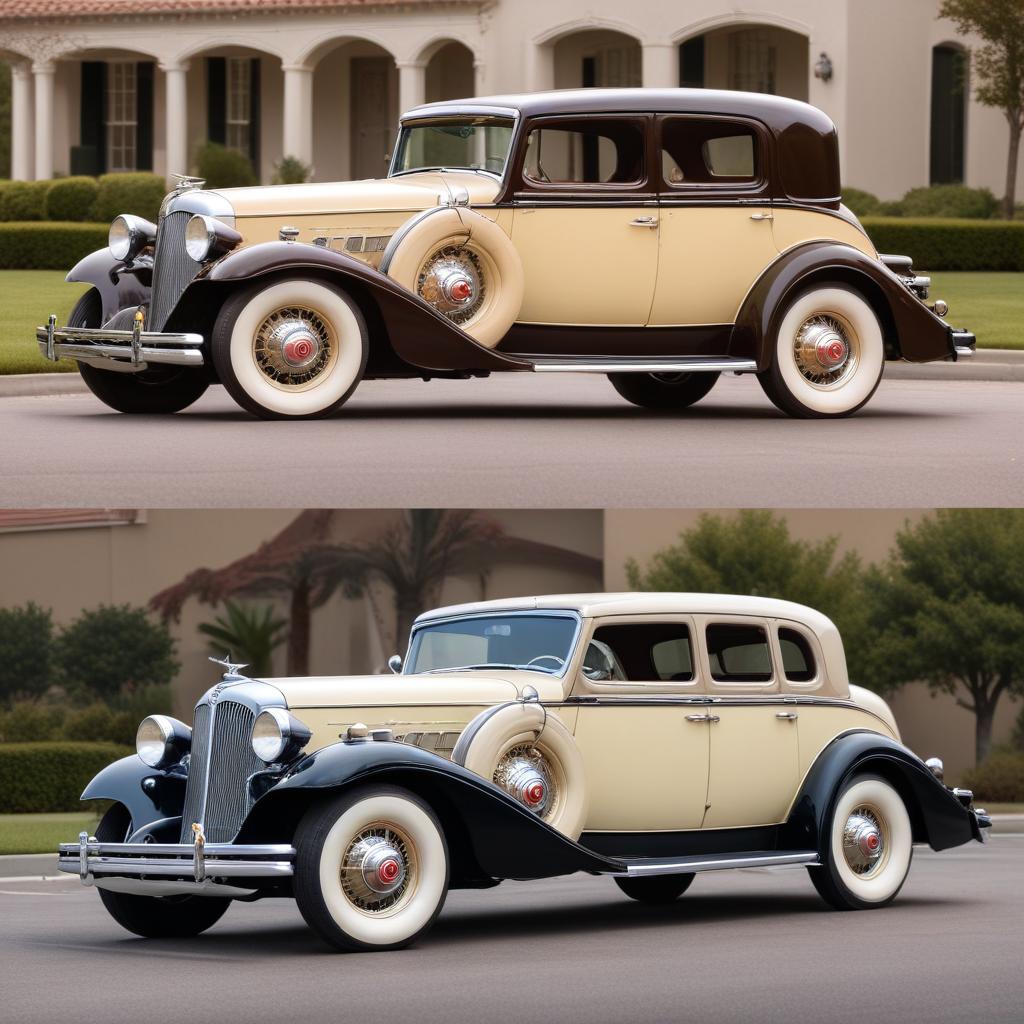
You take the smaller, lighter body from the Buick Special. You drop in the biggest, most powerful engine from the Roadmaster—a 320 cubic inch straight-8 making 141 horsepower. You put it all together, and suddenly you have a car that will cruise at 95 mph all day and touch 100 mph without breaking a sweat .
This was 1936. The average road was two lanes. The average speed limit was whatever your nerves could handle.
The name came from a Buick executive who had just returned from England. He explained that British drivers called hitting 100 miles per hour “doing the century.” The room loved it. The Buick Century was born .
And here is the irony: the men who bought these cars were not hot-rodders. They were bankers, lawyers, doctors—men who wanted a suit-and-tie sedan that could outrun anything on two lanes when they needed to make time. Hence the nickname that stuck for decades: “the banker’s hot rod.”
Then World War II happened. On February 4, 1942, civilian car production stopped. The Century, like everything else, went to war. By the time peace returned, Buick had other plans .
The Return of Speed: V8 Power and Police Pursuits (1954–1958)
Buick brought the Century back in 1954 using the exact same recipe that worked before. Take the light Special body. Stuff it with the 322 cubic inch “Fireball” V8. Add Dynaflow automatic transmission. Watch it fly .
But this time, something unexpected happened.
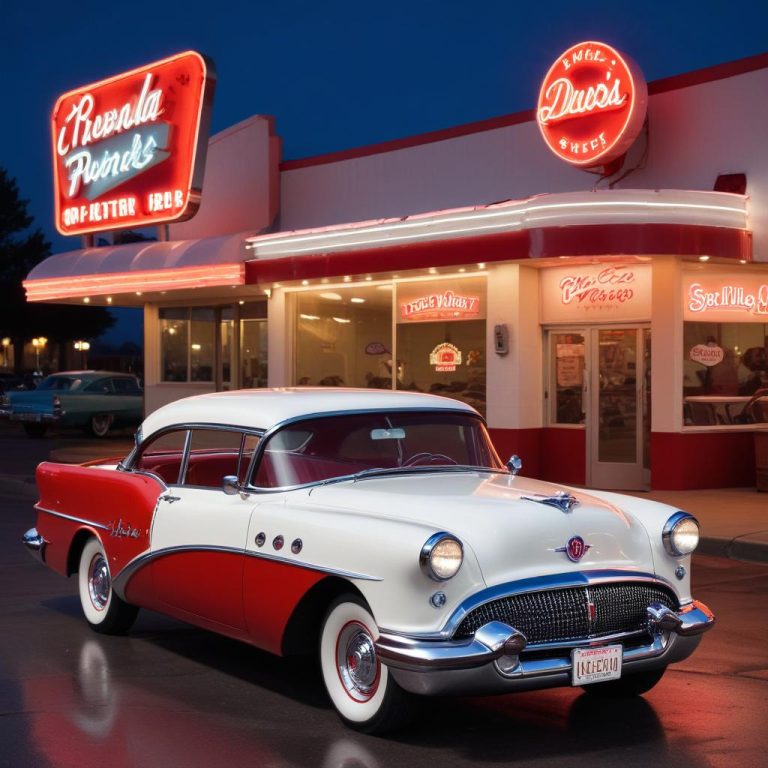
The California Highway Patrol placed an order for 270 Century two-door sedans. They needed cars that could chase down anything on the road, and the Century delivered. Then Hollywood came calling. The hit TV show Highway Patrol featured Broderick Crawford behind the wheel of a Century, and suddenly America saw Buick not as your grandfather’s car, but as the law’s car .
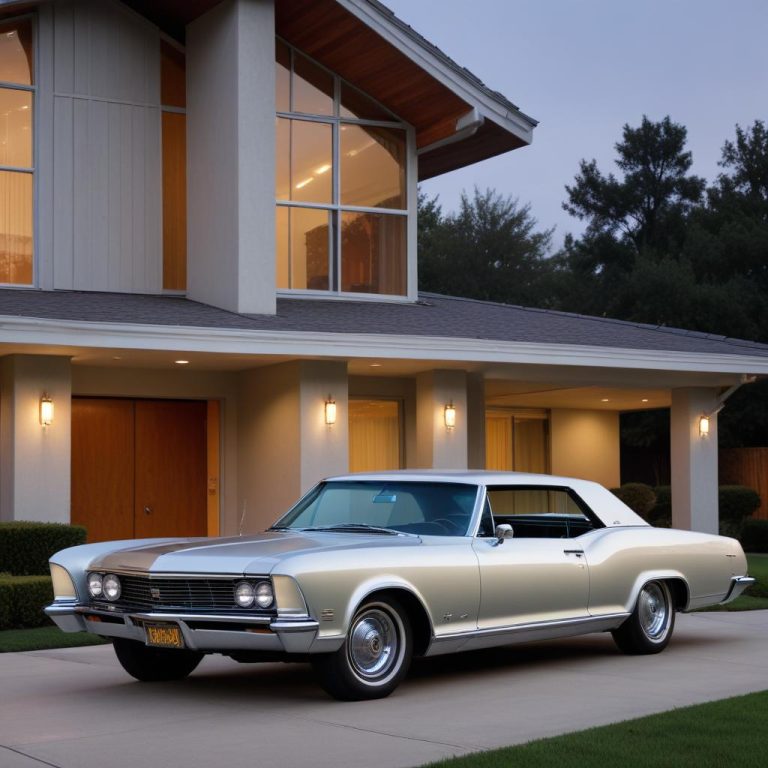
1955 brought something else important: the four-door hardtop Riviera. It was the first time you could get a pillarless sedan—no visible center post between the windows—and it was gorgeous. The Century offered it before Cadillac did .
By 1959, the Century name vanished again, replaced by the Invicta. But it would not stay dead for long.
The Family Era Begins: Colonnades, Woodgrain, and V8 Wagons (1973–1977)
When the Century returned in 1973, it had changed completely.
Gone was the full-size chassis. Gone was the “banker’s hot rod” positioning. The new Century was a mid-size built on GM’s A-body platform, sharing bones with the Pontiac Grand Prix, Oldsmobile Cutlass, and Chevrolet Chevelle . It replaced the Skylark as Buick’s smaller offering, but here is the thing: smaller was relative.
These cars were still enormous. They weighed two tons. They drank gasoline like it was going out of style—which, as it turned out, it was.
You could still get a Century with a 455 cubic inch V8 pumping out 250 horsepower, but the oil crisis had other ideas. By 1975, the standard engine was a 231 cubic inch V6. The muscle was softening .
But the wagon? Oh, the wagon.
The 1977 Century Custom wagon is now a cult classic. Barn Finds recently featured a 56,000-mile survivor wearing original beige paint, woodgrain siding, and Torq-Thrust wheels. The owner swapped in a Chevy 355, but the magic is in the shape—that upright roofline, those stacked rectangular headlights, that proud Buick grille .
“There’s just something cozy about a big 1970s wagon. Acres of vinyl on that wide bench seat, the driver getting kicked in the kidneys for the 33rd time in the last 15 miles—it’s magical.”
The Front-Drive Revolution: Downsizing and Endurance (1978–1996)
1978 brought a second earthquake.
The Century was completely redesigned—and shrank by more than a foot. It lost inches in width and hundreds of pounds in weight. V6 engines were now standard, not optional. Rear-wheel drive was gone; the new Century pulled rather than pushed .
The Aeroback coupe arrived with a fastback roofline that buyers never quite loved. By 1980, the fastback was gone. By 1982, the Century switched to front-wheel drive permanently, riding the same A-platform as the Oldsmobile Cutlass Ciera, Pontiac 6000, and Chevrolet Celebrity .
And here is where the Century became what most people remember: the sensible family car.
Consumer Guide’s verdict on the 1990–1996 models says it best: “Nothing flashy here, but Century can be a sensible choice for families on a budget.”
The V6 made 160 horsepower—exactly the same output as the 3.3-liter and later the 3.1-liter. It was quiet. It was smooth. It returned 20–29 MPG. And it refused to die .
You have to understand: the Pontiac 6000 and Chevrolet Celebrity were gone by the early 1990s. The Oldsmobile Cutlass Ciera hung on until 1996. But the Century? It kept going. And going. And going.
Chart: Buick Century Production Lifespan vs. Contemporaries
This chart illustrates how the Century outlasted every single one of its original platform mates—and most of its competitors.
Data compiled from production records. The Century’s 32-year continuous run (1973–2005) is nearly triple that of its GM stablemates.
The Final Form: W-Body, Bench Seats, and Quiet Dignity (1997–2005)
In 1997, the Century changed platforms one last time.
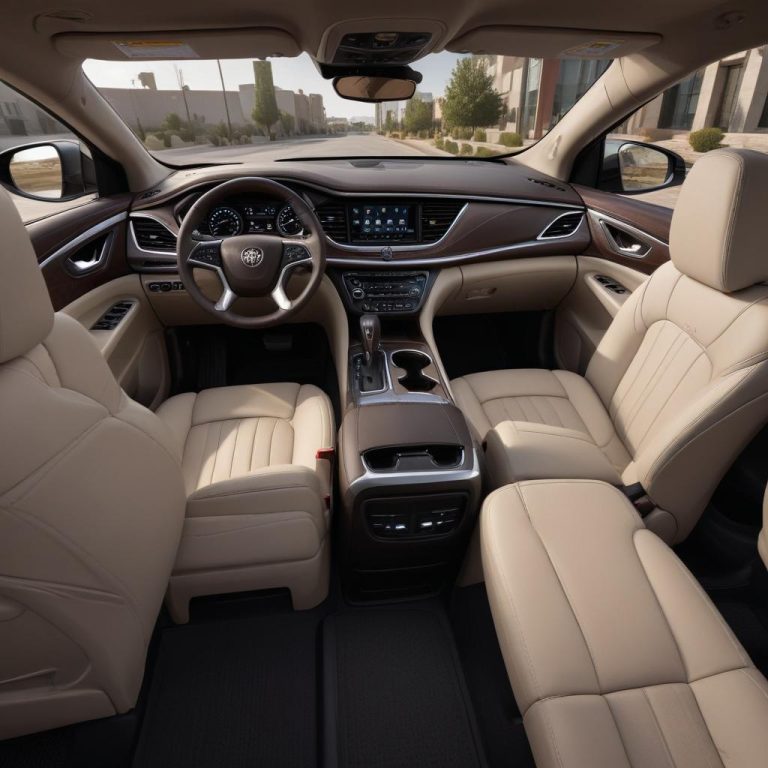
It moved to the W-body architecture, sharing it with the Regal. But here is the clever part: Buick positioned the Century below the Regal. It got the 3.1-liter V6 (160 hp, later 175 hp) while the Regal got the supercharged 3.8. It had a column shifter and a front bench seat. The Regal had a console and bucket seats .
Why? Because Buick realized something important. Some families do not want a sporty coupe. They want to seat six people. They want grandma in the middle of the front seat and three kids across the back. They want cloth upholstery that does not burn your thighs in July.
The 1998–2005 Century was that car.
J.D. Power notes that the Century’s column-mounted shifter and front bench seat allowed it to accommodate six passengers—a genuine rarity by the late 1990s . Fuel economy was respectable: 20 city, 29 highway. The engine was bulletproof. The transmission was a 4-speed automatic shared across half the GM lineup .
And it was cheap. The 2005 model started at $22,195, often discounted below $20,000 .
By the end, Buick was selling the Century almost exclusively to loyal repeat buyers. People who had owned Buicks for thirty years. People who did not want touchscreens or navigation systems. People who just wanted a car that started every morning, rode softly, and did not embarrass them at church on Sunday.
The last Buick Century rolled off the line on October 25, 2004 . It was replaced by the LaCrosse, a car that tried to be modern and sporty and European. It was fine. But it was never the Century.
Comparison Table: The Three Eras of Buick Century
| Generation | Years | Vehicle Type | Powertrain | Key Features | Cultural Nickname |
|---|---|---|---|---|---|
| First Life | 1936–1942 | Full-size performance sedan/coupe | 320.2 cu in I8, 141 hp, 3-speed manual | Streamlined styling, 100+ mph top speed, short-wheelbase body | “Banker’s Hot Rod” |
| Second Life | 1954–1958 | Full-size performance sedan/wagon | 322–364 cu in V8, 200–300 hp, Dynaflow | 4-door hardtop Riviera, Panoramic windshield, CHP fleet | “Highway Patrol Special” |
| Third Life (Gen 1) | 1973–1977 | Mid-size rear-drive sedan/coupe/wagon | 231 V6, 350/455 V8, 3/4-speed auto | Colonnade styling, opera windows, woodgrain wagons | “Last of the Big Buicks” |
| Third Life (Gen 2) | 1978–1996 | Mid-size front-drive sedan/coupe/wagon | 2.5L I4, 2.2L I4, 3.1/3.3L V6, 3/4-speed auto | Aeroback coupe, Turbo V6 (rare), 6-passenger option | “The Survivor” |
| Third Life (Gen 3) | 1997–2005 | Mid-size front-drive sedan | 3.1L V6 (160–175 hp), 4-speed auto | W-body platform, bench seat/column shifter, 6-passenger seating | “Family Favorite” |
Why the Century Still Matters: Used Market Wisdom
Here is where this history lesson becomes useful to you.
The 1997–2005 Buick Century is one of the best used car bargains in America right now.
Not because it is exciting. It is not. Not because it is prestigious. It never was. But because it solves the three biggest problems with buying a 20-year-old car:
1. Parts availability. The 3.1-liter V6 (Vin Code J) was used in everything from Malibus to Ventures to Grand Ams. You can rebuild this engine with parts from AutoZone and a Saturday afternoon.
2. Electronic simplicity. The Century has almost nothing that can fail electronically. No navigation screen to delaminate. No parking sensors to short out. No adaptive cruise control radar to misalign. It is analog in a digital world.
3. Owner community. These cars were bought new by people who maintained them. Look for a 2000–2005 Limited or Special Edition with service records. They exist. They are often one-owner garage queens.
Consumer Guide advises: “Forget the 4-cylinder models and look for a livelier, quieter V6.” The same applies here. The V6 is the only engine worth owning.
Frequently Asked Questions
How fast could the original Buick Century actually go?
Sustained speeds of 95 mph, with a top speed exceeding 100 mph. In 1936, that made it one of the fastest American production cars .
Why did Buick stop making the Century in 2005?
GM consolidated its mid-size sedans. The Century and Regal were both replaced by the LaCrosse, which offered more modern styling and features .
Are Buick Centuries reliable cars?
Later models (1997–2005) are very reliable. The 3.1L V6 and 4T65-E transmission are well-understood and inexpensive to maintain. Early 1990s models had transmission and engine bearing issues, but most were fixed under recall .
What is a Buick Century TourX?
There isn’t one—that’s a common confusion. The Regal TourX (2018–2020) is the wagon; the Century never offered a TourX model. The Century wagon ended in 1996 .
Is the Buick Century front-wheel drive or rear-wheel drive?
Both. 1973–1977 models are rear-drive. 1978–1981 models are a mix. 1982–2005 models are front-drive .
What engine should I look for in a used Century?
The 3.1L or 3.8L V6. Avoid the 2.2L four-cylinder entirely. It is underpowered and gets barely better fuel economy than the V6 .
How much is a 2005 Buick Century worth today?
Excellent condition examples with under 75,000 miles trade between $4,000–$6,000. Higher mileage cars under $3,000. This is depreciation working in your favor .
The Verdict: From 100 MPH to Family Favorite
The Buick Century is not a collector car. It will never bring six figures at Barrett-Jackson. It will never be featured in a hipster coffee table book about forgotten classics.
But it earned its place.
It was there when America needed speed during the Depression. It was there when California needed pursuit cars in the 1950s. And it was absolutely, completely, undeniably there when millions of families needed affordable, honest transportation from 1973 all the way until 2005.
Buick built 32 model years of the modern Century. That is longer than the Model T ran. Longer than the original Beetle ran in America. Longer than most automotive nameplates have even existed.
The Century outlived the Cutlass. It outlived the Celebrity. It outlived the Lumina, the Intrepid, the Taurus, and a dozen other competitors that tried to take its lunch money.
And now it sits in used car listings, faded paint, stained headliners, 160,000 miles on the clock, asking $2,200 or best offer.
It is not asking to be admired. It is asking to be driven.
And that, right there, is exactly what it has always done best.
Did your family own a Buick Century? Was it a wood-paneled wagon, a 1970s Colonnade coupe, or a 2000s sedan that just wouldn’t quit? Tell us your Century story in the comments—we want to hear it.
References: