Exploring Pre-Owned Cars: Buick Regal Years to Watch For
Exploring Pre-Owned Cars: Buick Regal Years to Watch For – A Used Buyer’s Roadmap
You hand over $8,500 for a 2011 Regal CXL, the leather still smells new, and the odometer reads 65,000 miles—then 5,000 miles later you’re staring at a $3,200 estimate for timing chain replacement and wondering if the mechanic just said “engine rebuild” or “engine fire.”
TL;DR
The Buick Regal is a confusing used car paradox. Some years deliver 200,000 miles of quiet, comfortable service. Other years will drain your bank account and leave you stranded. The 1997–2004 models with the 3.8L V6 are surprisingly bulletproof—that engine is legendary for a reason . The 2011–2012 models are the absolute landmines: timing chain failures, engine fires, oil consumption measured in quarts per week, and water-filled headlights that look like fish tanks . The sweet spot? 2015 and newer, especially the 2018–2020 sixth generation which finally fixed most of the Ecotech gremlins . If you absolutely must have the sporty 2011–2017 body style, hunt down a 2014 or later—the 2014 refresh fixed some interior quality issues and updated the tech . But here’s the cold hard truth: the Regal was discontinued in North America after 2020, parts availability is shrinking, and you’re buying a dead platform. Choose carefully, or bring a thick wallet.
Key Takeaways
- Avoid 2011 and 2012 at all costs. Over 500 complaints, timing chain failures as early as 72,000 miles, and documented engine fire risk .
- The 3.8L V6 models (1997–2004) are the reliability kings. 200 horsepower, 28 mpg highway, and owners regularly report 20+ years of service .
- 2015 and 2017 are the hidden gems of the fifth generation. Fewer complaints, most of the Ecotech bugs worked out, and still affordable .
- 2018–2020 Sportback and TourX are the most reliable modern Regals, but they’re rare and hold their value stubbornly .
- Annual maintenance averages $563—slightly below average for midsize sedans. But a single timing chain job on a 2011 will exceed three years of normal maintenance .
- The 2012 GS Turbo looks tempting on paper. Reality: blown turbos at 50,000 miles, water intrusion in headlights, and GM refuses to recall either issue .
The Two Souls of the Buick Regal: Understanding What You’re Actually Buying
Here’s the thing about the Regal that most used car guides don’t tell you: there are two completely different cars wearing the same nameplate.
Soul One: The Old School Buick (1997–2004). This is your grandfather’s Regal. It rides on an older GM platform, feels floaty, and has cloth seats that don’t look special. But under the hood lives the 3800 Series II V6—widely considered one of the best engines General Motors ever built. It makes 200 horsepower, gets 28 mpg on the highway, and will run forever with basic oil changes . Owners on forums report 250,000 miles with nothing but alternators and water pumps. These cars are ugly by modern standards. They are also incredibly cheap and incredibly reliable.
Soul Two: The German Buick (2011–2020). This Regal is actually an Opel Insignia with Buick badges. It was designed in Germany, engineered in Germany, and feels completely different. The steering is heavier. The suspension is taut. The interior looks modern. But underneath that European sophistication lurks the GM Ecotech 2.4L engine, and this engine has problems . Timing chain guides made of plastic that disintegrate. Oil consumption that would embarrass a two-stroke. Electrical gremlins that come and go like ghosts.
You cannot treat these two cars the same. One is a reliable appliance. The other is a temperamental European sedan wearing an American bowtie.
The Generations: A Quick Visual Guide
Fourth Generation (1997–2004)
- Engine: 3.8L V6
- Power: 200 hp
- Fuel economy: 20/28 mpg
- Reliability rating: 8.1/10 (iSeeCars)
- Used price range: $1,160–$9,470
- Verdict: Buy with confidence
Fifth Generation (2011–2017)
- Engines: 2.4L Ecotech / 2.0L Turbo
- Power: 182–259 hp
- Fuel economy: 19/30 mpg
- Reliability rating: Mixed (8.1/10 safety, reliability data incomplete)
- Used price range: $4,499–$20,995
- Verdict: Extremely year-dependent. Avoid 2011–2012.
Sixth Generation (2018–2020)
- Engines: 2.0L Turbo / 3.6L V6 (GS)
- Power: 250–310 hp
- Fuel economy: 22/32 mpg
- Hatchback cargo space: 892 liters (31.5 cubic feet)
- Verdict: Most reliable modern choice, but scarce
The Minefield: Buick Regal Years to Absolutely Avoid
Let’s be brutally honest about the bad years. Not “some owners complained” bad. Transmission-rebuild, engine-fire, timing-chain-failure-at-50k bad.
2011 Buick Regal: The One That Started the Fire
Over 500 complaints on CarComplaints. Four recalls. A staggering 102 NHTSA complaints about the engine alone .
The 2011 Regal’s primary sin is the timing chain. The guides are plastic. They crack. The chain stretches. Then the engine either rattles itself to death or, in some documented cases, catches fire .
One owner bought a 2011 with 65,000 miles, loved it for a year, then needed timing chains at 81,000 miles. Another reported the engine shutting off on the highway, followed by sparks and smoke from under the hood. A third owner spent $2,000 on a transmission, only to have the timing chain fail two months later .
The 2.4L Ecotech in the 2011 also consumes oil at alarming rates. Multiple owners report adding a quart every 1,000–2,000 miles. GM faced class action lawsuits over this engine in the Chevrolet Equinox and GMC Terrain. The Regal uses the same powertrain .
The 2011 Regal is cheap for a reason. That reason is usually sitting in a mechanic’s bay.
2012 Buick Regal: Somehow Worse
If you can believe it, the 2012 is actually considered worse than the 2011 by some aggregators . CarComplaints ranks it as the single worst model year of the Regal.
The timing chain issue persists. One owner reported chain failure at 80,000 miles, was told the engine needed replacement, and was quoted thousands of dollars. The mechanic’s explanation? “This is common with this model.”
But the 2012 adds its own special flavor of misery: headlights that fill with water. Multiple owners describe their Regals as having “fish tanks” on the front. Water pools inside the housing, shorts out bulbs, and creates fire risk. One owner explicitly wrote: “Should be declared a recall before this car goes on fire.”
The 2012 GS Turbo is a particular tragedy. On paper: 270 horsepower, manual transmission available, sport suspension. In reality: turbos failing at 50,000 miles, no recall, and owners left holding a $4,000 repair bill .
2000–2001: The Transmission Trouble Years
These are the other major landmines. The 2000 Regal collected over 300 complaints and ten recalls. The transmission system was the primary culprit. One owner reported the car abruptly lost power at 60 mph, the dashboard flickered, and within five minutes even the hazard lights died .
The 2001 Regal had eight recalls and, more alarmingly, documented engine fire reports. One owner attempted to start the car on a warm day, heard a loud boom, and watched flames erupt from under the hood while the car was idling .
There are approximately 18 million used cars for sale in America. You do not need to buy one with a history of combustion events.
The Goldilocks Years: What to Actually Buy
1997–2004 (3.8L V6): The Reliable Tank
Let’s be clear: these cars are old. They lack modern infotainment. They handle like boats. The interiors are dated.
But they are mechanically excellent. The 3800 Series II V6 is famously durable. The 4T65-E transmission, while not invincible, is well-understood and rebuildable for reasonable money. Owners consistently rate these cars 4.5–5.0 stars on review sites .
One owner reported buying a 2002 Regal LS with 60,000 kilometers, driving it for years, and calling it “the best car I have ever had.” Another has owned their 1987 Regal for 20 years with zero trouble .
Price: $2,000–$7,000 depending on condition. That’s not a car payment; that’s a vacation.
Watch out for: Intake manifold gasket failure (coolant leaks) and the infamous Dexcool sludge issues. If the coolant looks like muddy iced tea, walk away .
2015 Buick Regal: The Fifth Generation Sweet Spot
By 2015, GM had spent four years quietly fixing the 2011–2012 disasters. The timing chain issues were largely resolved. The oil consumption, while not eliminated, was reduced. The electrical gremlins became less frequent.
The 2015 model year has significantly fewer complaints than its earlier fifth-generation siblings. Owners praise the ride quality, the available AWD, and the much-improved reliability over the 2011–2012 models .
You can also get the 2.0L turbo here, which is the more entertaining engine. Just be diligent about oil changes—turbo engines punish neglect.
Price: $12,000–$18,000.
Watch out for: Infotainment screen delamination (a known issue) and the center console being annoyingly small .
2018–2020 (Sixth Generation): The Best Modern Regal
This is the Regal done right. The Sportback hatch gives you genuine utility—31.5 cubic feet of cargo space with the seats up, 60.7 with them folded. That’s more than some compact SUVs .
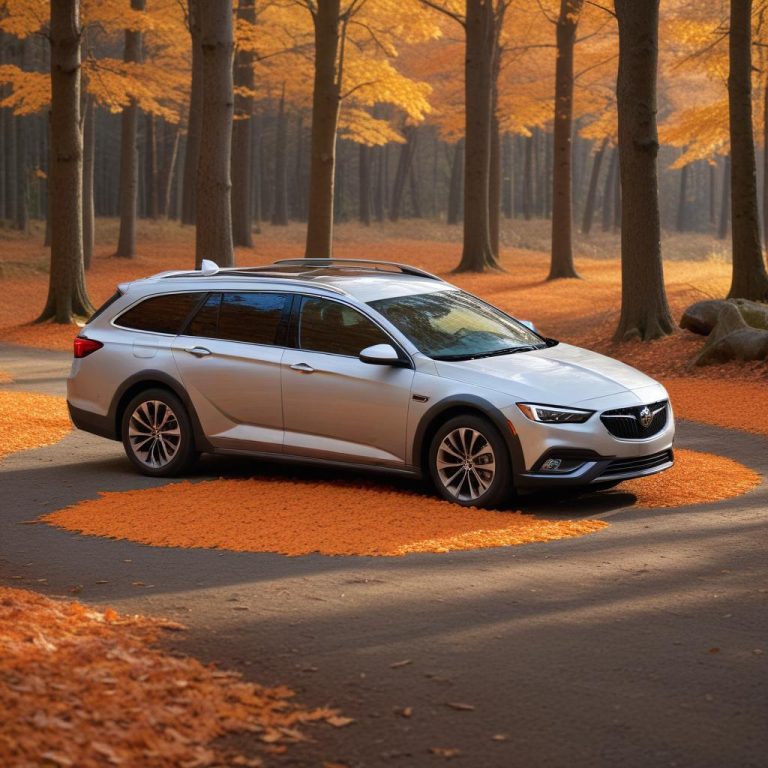
The Regal TourX is the wagon version, and it has developed a passionate cult following. Long roof, turbo power, available AWD, and the same bulletproof 2.0L engine that GM spent a decade refining.
The GS trim for 2018–2020 got a 3.6L V6 making 310 horsepower—the most powerful Regal ever sold in America. It’s genuinely quick, genuinely comfortable, and genuinely rare .
Reliability ratings for the sixth generation are strong. By this point, GM had addressed nearly all the Ecotech engine issues. The 9-speed automatic is a significant improvement over the earlier 6-speed. Owners report high satisfaction .
Price: $18,000–$28,000. These hold value better than earlier models.
Watch out for: They stopped making them in 2020. Parts support is fine now, but in five years? Something to consider.
Chart: Regal Reliability by Generation
This chart visualizes the dramatic reliability differences between generations.
Note: Reliability index is a composite estimate based on owner complaint volume, recall frequency, and known mechanical issues. Not an official OEM rating .
The Complete List: Good Years vs. Bad Years
Buy These (If You Must Buy a Regal):
- ✅ 1997–2004 (3800 V6 models) – Old but tough
- ✅ 2014–2015 – Post-refresh, fewer engine problems
- ✅ 2017 – Solid late-model fifth generation
- ✅ 2018–2020 – Best modern choice, especially Sportback/TourX
Approach With Caution:
- ⚠️ 2010 – First year of the new generation, some teething issues
- ⚠️ 2013 – Better than 2011-2012, but still not great
- ⚠️ 2016 – Mixed reviews, some transmission complaints
Avoid Completely:
- ❌ 2000 – Transmission failures, electrical fires, 10 recalls
- ❌ 2001 – Engine fire risk, 8 recalls
- ❌ 2011 – Timing chain failure, engine stalling, oil consumption
- ❌ 2012 – Timing chain, water-filled headlights, turbo failures
FAQ: Your Used Buick Regal Questions, Answered
What is the single most reliable Buick Regal year?
The 1997–2004 models with the 3.8L V6 have the strongest long-term reliability record. Among modern Regals, the 2018–2020 sixth generation is the most dependable .
Why is the 2011 Buick Regal so bad?
Timing chain failure is the primary issue. The plastic guides crack, the chain stretches, and the engine can rattle, lose power, or—in extreme cases—catch fire. Over 500 complaints have been filed .
Is the Buick Regal TourX reliable?
Yes. The TourX (2018–2020) uses the refined 2.0L turbo engine and benefits from GM’s years of fixes. It’s considered one of the most reliable modern Regals .
How much does it cost to maintain a used Regal?
Annual maintenance averages $563, slightly below the $652 average for all vehicles. However, a single timing chain replacement on a 2011–2012 can cost $2,000–$3,200 .
Should I buy a Regal with the 2.0L turbo or the 2.4L?
The 2.0L turbo is more fun and generally more reliable than the problematic 2.4L Ecotech. The 2.4L is the source of most oil consumption and timing chain complaints. Stick with the turbo .
Are parts hard to find since the Regal was discontinued?
Currently, parts availability is fine. GM is legally required to support vehicles for 10 years post-production. The 2020 models have support until 2030. For 1997–2004 models, aftermarket support remains strong due to the shared 3800 engine with other GM cars .
What is the most common problem across all Regal years?
Electrical gremlins—flickering lights, unresponsive infotainment, malfunctioning heated seats, and intermittent warning lights. It’s the one complaint that spans every generation .
Is the Regal GS worth the premium?
The 2012–2016 GS is risky—turbo failures are documented. The 2018–2020 GS with the 3.6L V6 is excellent, but rare and expensive. Only buy a GS if you have records proving meticulous maintenance .
The Mechanic’s Final Word
Here’s what the data doesn’t tell you, but twenty years of wrenching does.
If you buy a 2011–2012 Regal, you are gambling. You might get 50,000 trouble-free miles. You might get 5,000. The timing chain is not an “if” failure; it’s a “when.” GM never issued a recall. They issued a “special coverage warranty” that expired years ago. You are on your own .
If you buy a 1997–2004 Regal, you are buying an appliance. It won’t impress anyone. It won’t win stoplight races. But it will start every morning, run quietly, and cost you almost nothing beyond oil changes and the occasional alternator.
If you buy a 2018–2020 Regal, you are buying the car the fifth generation should have been. It’s handsome, practical, and finally reliable. But you’re also buying a discontinued model from a brand that has abandoned sedans. Resale value will continue to slide.
The Regal is not a bad car. It’s just a car that had four truly terrible years that poisoned the well forever.
Which Regal year did you own—nightmare or dream ride? Drop your story in the comments and help the next buyer avoid the 2011 trap.
References:
- CoPilot: Most Reliable Buick Regal Years
- CoPilot: Buick Regal Years to Avoid (2000, 2001, 2011, 2012)
- iSeeCars: Buick Regal Generations & Reliability Data
- Otogo: Buick Regal Used Buyer’s Guide (2014 Refresh, 2018+ Generation)
- Carscounsel: Best and Worst Buick Regal Years
- Cars.com: 2011 Buick Regal Consumer Reviews
- Cars.com: 2012 Buick Regal Consumer Reviews
- AutoTrader.ca: Buick Regal Owner Reviews (1997-2015)
- PartsHawk: Buick Regal Reliability and Common Problems
- Carly: Top 10 Common Buick Regal Problems