Riviera by Buick: A Look Back at Automotive Artistry
The first time a 1963 Buick Riviera glides past you at dusk—hidden headlights tucked behind those vertical grille bars, chrome catching the last light like a tailored cuff catching candlelight—you do not ask what year it is or how much horsepower it has. You ask what it is. And that question, asked by millions over 36 years, is the truest measure of automotive artistry.
TL;DR
The Buick Riviera was not merely a car. It was a rolling argument that American luxury did not have to shout. Across eight generations and 1.1 million examples, the Riviera swung between breathtaking brilliance and bewildering confusion—the 1963 “knife-edge” masterpiece, the 1966 coke-bottle sculpture, the 1971 boat-tail controversy, the 1986 touchscreen pioneer, and the 1995 supercharged swan song. It never outsold the Thunderbird. It often confused its own buyers. But it inspired designers from Pininfarina to Raymond Loewy, and today, a pristine first-generation car commands six figures at auction while a forgotten 1990s coupe sits waiting for rediscovery . This is not the story of a sales champion. This is the story of a car that refused to be invisible.
Key Takeaways
- Art Before Commerce: The Riviera was born because Cadillac rejected Bill Mitchell’s XP-715 prototype. Buick, desperate and daring, said yes .
- Three Peaks: The 1963–1965 “knife-edge” first generation, the 1966–1970 “coke-bottle” second generation, and the 1971–1973 “boat-tail” third generation represent the Riviera’s stylistic high-water marks—each radically different, each unforgettable .
- Sales vs. Soul: The Riviera sold 112,544 units in its first three years. The Thunderbird sold more. But the Riviera landed in the Museum of Modern Art’s consciousness, and the Thunderbird became a prop in retirement community advertisements .
- The Touchscreen Gamble: The 1986 seventh generation introduced the Graphic Control Center—the world’s first production touchscreen interface. It was slow, confusing, and a decade ahead of its time. Buyers hated it. Buick abandoned it. History is kinder .
- Collector Math: A 1964 Riviera with the 425 “Super Wildcat” V8 is the most desirable first-generation car. Auction values for pristine examples now exceed $150,000. Meanwhile, a 1995–1999 supercharged coupe can be had for pocket change—and shares its bulletproof 3800 V6 with a million LeSabres .
- The Ghost Lives: Buick displayed Riviera concepts in 2007 and 2013. Neither reached production. But enthusiasts still render revival dreams on Midjourney, and the nameplate remains the brand’s emotional north star .
The Knife-Edge: How a London Fog Created American Art (1963–1965)
Let me take you to 1958.
Bill Mitchell, the barrel-chested, cigar-chewing head of GM Styling, is walking through Mayfair in London. He sees a custom-bodied Rolls-Royce—one of those coachbuilt Park Ward creations where the fenders are vertical slabs, the waistline is sharp enough to cut paper, and the whole car looks like it was carved from a single block of Swedish granite. He stops. He stares. He later tells his team: “I want that knife-edge look. But lower.” .
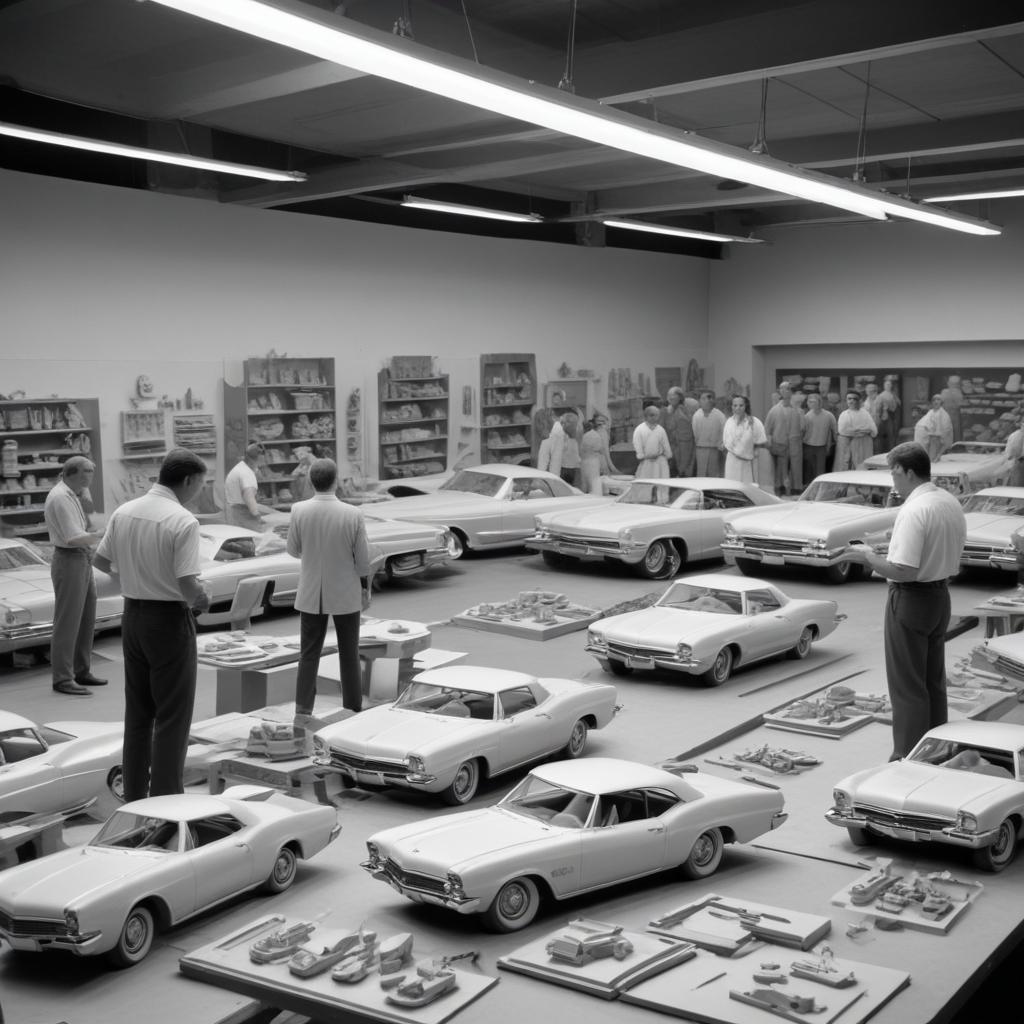
That moment became the XP-715, a Cadillac-badged design study that Cadillac did not want. Too small. Too edgy. Too risky. The project was thrown open to GM’s divisions. Pontiac wanted to modify it. Oldsmobile wanted to modify it. Buick, then struggling with an image so stodgy it made orthopedic shoes look exciting, walked in and said: “We will build it exactly as drawn.” .
This is where Buick’s design courage peaked.
The 1963 Riviera shared nothing with any other GM car. That was almost unheard of in an era of platform-sharing and corporate badge-engineering. It rode a shortened Buick chassis, but the body was entirely unique. The front fenders curved gently outward. The grille was a delicate mesh of vertical bars—not the toothy chrome grin of earlier Buicks, but something almost European in its restraint. The headlights were hidden behind electrically actuated doors that blended seamlessly into the fender texture .
Motor Trend clocked it at 0–60 in 8 seconds flat, with a top speed of 115 mph and fuel economy of 13.2 mpg that nobody bragged about. But performance was never the point. The point was the way the light played off those flanks. The way the rear wheels were tucked under muscular haunches. The way the cabin wrapped around four passengers like a Savile Row suit .
Sergio Pininfarina studied this car. Raymond Loewy studied this car. William L. Mitchell, who had just penned the C2 Corvette Sting Ray, had somehow done it again .
Buick deliberately limited first-year production to 40,000 units. They wanted exclusivity. They wanted the Riviera to feel like a car you had to deserve. Base price was $4,333—roughly $45,000 today. You got a 401 cubic inch Nailhead V8 making 325 horsepower, a Twin Turbine Dynaflow automatic, power brakes with those massive aluminum-finned drums, and an interior trimmed in optional leather .
You did not get a Thunderbird imitation. You got something better.
The Coke Bottle: When the Riviera Learned to Sculpt (1966–1970)
For 1966, Buick did something brave. They abandoned the Rolls-Royce inspiration entirely.
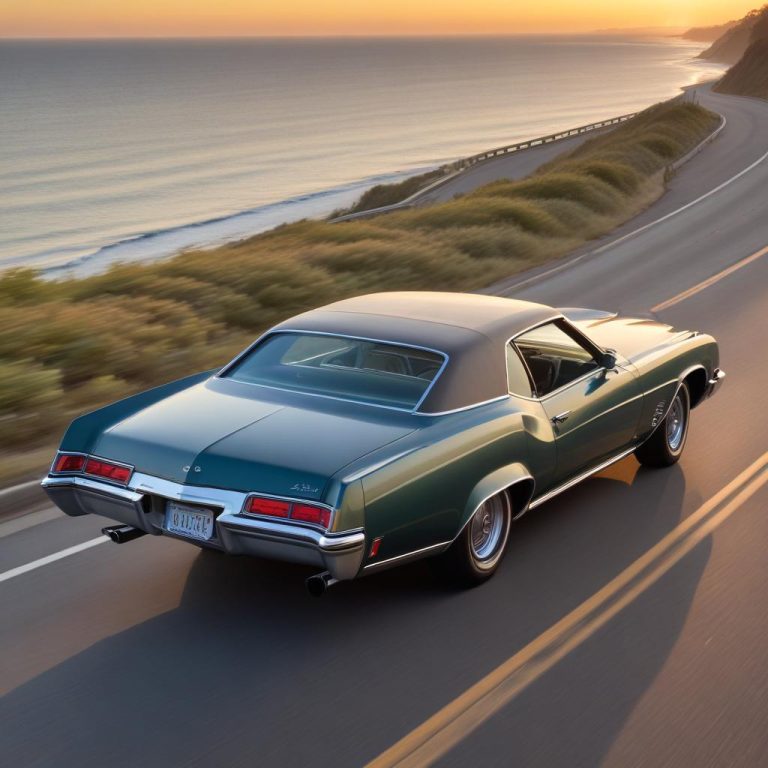
The new Riviera was longer, lower, and shaped like a Coca-Cola bottle—pinched in the middle, flared at the ends. The fastback roofline swept back dramatically. The hidden headlights moved above the grille, tucked under a pronounced brow. The stance was predatory, almost animalistic .
This generation is the one enthusiasts quietly fight over. Not because it is rare—Buick sold 227,669 of them—but because it is the sweet spot between 1960s elegance and 1970s aggression .
Under the hood, the old Nailhead was gone. In its place sat the 430 cubic inch V8, an all-new design producing 360 horsepower and enough torque to rearrange your spine. For 1970, that engine grew to 455 cubic inches. The Riviera was now genuinely fast—not just “quick for a luxury coupe,” but quick, period .
And yet.
The 1966 redesign brought something else: platform sharing. The Riviera now rode the same E-body architecture as the Oldsmobile Toronado. The Toronado was front-wheel drive. The Riviera remained rear-wheel drive. This gave Buick a handling advantage and a marketing dilemma—how do you explain to customers that your car is better because it is different from the shared platform? .
The answer, apparently, was styling. The 1966–1970 Riviera is all surface and no straight line. The front fenders bulge. The rear quarters swell. The roofline flows. It is automotive sculpture pretending to be transportation.
One designer later admitted: “We were trying to make it look like it was moving even when it was parked.”
Mission accomplished.
The Boat-Tail: 1971–1973 and the Bravest Mistake Buick Ever Made
Now we arrive at the controversial one.
You either love the 1971 Buick Riviera or you do not understand it. There is no middle ground.
Jerry Hirshberg, a young designer who would later become the head of Nissan Design, was given the assignment: make the Riviera look like nothing else on earth. He looked at the 1963 Corvette Sting Ray split-window coupe. He looked at the rocketship imagery of the Space Age. He drew a fastback roofline that tapered into a boat-tail rear deck, complete with two massive louvers on the trunk lid and a dramatic V-shaped back glass that wrapped around the rear passengers .
Automotive journalists hated it. They called it awkward, forced, and desperate.
Buyers hesitated. Sales dropped to 33,810 units in 1971—the lowest since the nameplate’s debut. The boat-tail was too weird. Too extreme. Too memorable .
But here is the thing about bold design. It ages differently.
Today, the boat-tail Riviera is the most sought-after generation among serious collectors. The 1971–1973 cars have presence. They look like nothing else from any manufacturer, any era, any country. They are rolling sculptures that happen to have 455 cubic inch V8s under the hood—detuned to 255 horsepower thanks to new EPA regulations, but still capable of shoving two tons of American steel to 60 mph in 8.1 seconds .
The Gran Sport package added a few horsepower, stiffer suspension, and a touch of machismo. It also added collectibility. If you find a ’71 GS boat-tail today with documentation and original sheet metal, you have found gold. Values are rising faster than almost any other Buick .
One collector recently paid £150,386 at auction. That is approximately $190,000. For a car that critics panned and buyers ignored .
The brave mistake, it turns out, was not a mistake at all.
Chart: Riviera Generations – Production vs. Passion
This chart illustrates the disconnect between what sold and what is remembered.
Bubble size represents relative production volume. Collector passion score estimated from auction data, forum consensus, and specialist commentary. Boat-tail production was lowest; passion score is second only to the original .
The Long Slide and the Touchscreen Gamble (1974–1993)
Let us be honest about the middle years.
The 1974–1976 Riviera softened the boat-tail into something more conventional. The 1977–1978 models were downsized in response to the oil crisis, losing the 455 V8 and much of their personality. By 1979, the Riviera had switched to front-wheel drive—a sensible engineering decision that somehow felt like a betrayal .
And yet.
The 1979 redesign was good enough to earn Motor Trend Car of the Year. The magazine praised its reduced weight, improved traction, and surprisingly nimble handling. It was no longer a performance car. It was a personal luxury coupe that happened to be efficient .
But efficiency does not inspire devotion.
Then came 1986.
The seventh-generation Riviera introduced something genuinely futuristic: the Graphic Control Center, the world’s first production touchscreen interface. You could adjust the radio, climate control, trip computer, and vehicle diagnostics by poking a green-glowing CRT screen mounted in the dashboard .
It was slow. It was laggy. It was confusing. It was a decade ahead of its time.
Buyers did not want to poke a screen to change the radio station. They wanted knobs. They wanted familiarity. The touchscreen became a symbol of everything wrong with 1980s American luxury—overcomplicated, underperforming, and out of touch with actual customers .
Buick quietly dropped the Graphic Control Center in 1990. The Riviera soldiered on for three more years, then went dark for 1994.
Total production for the seventh generation: less than 60,000 units over eight years. The Riviera was dying.
The Swan Song: Supercharged, Ignored, and Finally Gone (1995–1999)
Here is where the Riviera story gets bittersweet.
Buick knew the 1980s had been a disaster. They needed a comeback. So for 1995, they launched an entirely new eighth-generation Riviera—long, dramatic, and covered in curves. The design was organic, almost biological. No straight lines. No sharp edges. Everything flowed .
Under the hood: the supercharged 3800 Series II V6.
This engine is important. It produced 240 horsepower and 280 lb-ft of torque. It was bulletproof. It was smooth. It had been refined over a decade in the Park Avenue Ultra and would go on to become one of the most reliable American engines ever built .
Car and Driver tested a 1995 Riviera: 0–60 in 7.2 seconds. That was Lexus SC400 performance for $20,000 less.
The handling was finally European. No more wallowy mattress suspension. The Riviera rode on a stiffened G-body platform with real road feel and actual feedback through the steering wheel. It was quiet, fast, genuinely luxurious, and—dare I say it—fun .
Nobody bought it.
Total production for the 1995–1999 generation: under 90,000 units. The final year, 1999, saw only 1,787 examples built. Today, fewer than 100 are known to exist in roadworthy condition .
One passionate owner wrote: “GM took all the imperfections from the previous years and tweaked them out for the last year… I own 4. Few have seen these cars and fewer have driven them. A sleeper collectible.”
He is right. The 1995–1999 Riviera is the forgotten masterpiece. It handles. It accelerates. It does not break. And you can buy one for less than a down payment on a Hyundai.
But it was too late. SUVs were taking over. Coupes were dying. Buick, having poured its heart into a car nobody wanted, quietly discontinued the Riviera with no successor.
Thirty-six years. Eight generations. One million, one hundred twenty-seven thousand, two hundred sixty-one cars.
And then silence.
Comparison Table: The Rivieras That Matter
| Generation | Years | Design Chief | Styling Theme | Engine Highlights | Collector Status | Why It Matters |
|---|---|---|---|---|---|---|
| First | 1963–1965 | Bill Mitchell | Knife-edge, Rolls-Royce inspiration | 401/425 Nailhead V8, 325–340 hp | Highly desirable, $40k–$150k | The one that started it all. Buick’s design peak . |
| Second | 1966–1970 | Bill Mitchell | Coke-bottle, fastback, sculptural | 430/455 V8, 360 hp | Strong following, $25k–$60k | The torque monster. Peak 1960s American GT . |
| Third | 1971–1973 | Jerry Hirshberg | Boat-tail, split rear window, louvers | 455 V8, detuned 255–330 hp | Most collectible, values rising fast | The brave mistake. Design courage over focus groups . |
| Sixth | 1979–1985 | Bill Porter | Formal, front-drive, downsized | 3.8L V6 turbo, 170–185 hp | Low collector interest | Motor Trend Car of the Year. Important transition . |
| Seventh | 1986–1993 | Dave Holls | Aero, rounded, touchscreen pioneer | 3.8L V6, 165–170 hp | Emerging curiosity | First production touchscreen. A decade too early . |
| Eighth | 1995–1999 | Wayne Kady | Bio-design, organic curves | Supercharged 3800 V6, 240 hp | Sleeper, under 100 survivors | The forgotten masterpiece. European handling, American heart . |
The Ghost That Will Not Die: Riviera Concepts and the Dream of Revival
Here is the strange part.
Buick has not built a Riviera in 27 years. But they cannot stop thinking about it.
In 2007, Buick unveiled the Riviera Concept at the Shanghai Auto Show—a sleek, four-seat, plug-in hybrid coupe with gullwing doors and enough curves to make the original blush. It was gorgeous. It was futuristic. It was never built .
In 2013, another Riviera Concept appeared. This one was more restrained, more production-ready, with a flowing roofline and a plug-in hybrid powertrain. It was displayed. It was photographed. It was returned to storage .
Neither concept reached production.
But the dream persists. Enthusiasts render revival concepts on Midjourney. Bloggers write passionate pleas for Buick to bring back the nameplate. Some imagine it riding the Alpha 2 platform from the Cadillac CT5-V Blackwing, packing a supercharged V8 and rear-wheel drive. Others envision it as a sleek electric coupe, silent and swift .
One recent editorial put it bluntly: “The heart & soul of Buick’s past deserves a chance at a future.”
Will it happen? Probably not. Coupes are dying. SUVs rule the market. Buick is now an all-SUV brand in China and nearly there in North America. The economics do not work .
But the fact that we are still asking the question—that is the Riviera’s legacy.
Why the Riviera Still Matters: Collector Reality and Human Truth
Let me give you the practical truth.
If you want a Riviera as an investment, buy a first-generation or a boat-tail. The 1963–1965 cars are blue-chip classics. The 1971–1973 cars are appreciating faster than almost any other Buick. One sold at auction in September 2025 for £150,386—approximately $190,000 USD .
If you want a Riviera to drive and enjoy, buy a 1995–1999. They are cheap—often under $8,000—and they offer modern reliability with 1990s character. The supercharged 3800 engine is bulletproof. The parts are shared with half the GM lineup. The handling is genuinely good. And you will never see another one at Cars and Coffee .
If you want a Riviera to restore, buy a 1978 or 1979 model. They are affordable, parts are available, and the front-drive cars have an underappreciated charm .
But the numbers only tell part of the story.
Here is the truth the auction data does not capture:
The Riviera matters because it tried. Every single generation—even the awkward ones, even the confused ones, even the ones that sold poorly and were panned by critics—every generation tried to do something interesting. Something bold. Something that had not been done before.
The 1963 car tried to bring European restraint to American luxury.
The 1966 car tried to sculpt metal into motion.
The 1971 car tried to make a boat-tail work on a coupe.
The 1979 car tried to prove efficiency was not boring.
The 1986 car tried to put a computer in your dashboard.
The 1995 car tried to build a BMW with Buick reliability.
Not all of these experiments succeeded. But none of them played it safe.
That is artistry. Not perfection. Not sales charts. Not auction results. The willingness to risk failure in pursuit of something memorable.
The Riviera failed plenty. But it was never, ever forgettable.
Frequently Asked Questions
What years was the Buick Riviera produced?
1963–1993, then 1995–1999. No 1994 model was produced. Total production: 1,127,261 vehicles across eight generations .
Who designed the original 1963 Buick Riviera?
Bill Mitchell, head of GM Styling, inspired by a custom-bodied Rolls-Royce he saw in London. The design was penned by stylist Ned Nickles .
Which Riviera is the most collectible?
The 1971–1973 boat-tail generation commands the highest prices among enthusiasts, followed closely by the 1963–1965 originals. A boat-tail sold for £150,386 in September 2025 .
What is a “Nailhead” V8?
Buick’s first overhead-valve V8, introduced in 1953. Nicknamed for the tiny, vertically oriented valves that resembled nails. The 1963–1965 Riviera used 401 and 425 cubic inch versions .
Did the Riviera really have a touchscreen in 1986?
Yes. The seventh-generation Riviera featured the Graphic Control Center, a CRT touchscreen interface for radio, climate, and diagnostics. It was discontinued in 1990 .
Is the 1990s Riviera reliable?
Extremely. The supercharged 3800 Series II V6 is one of GM’s most durable engines. The transmission and chassis components are shared with millions of other GM vehicles. Parts are cheap and plentiful .
How much is a 1985 Buick Riviera worth today?
A 1985 example recently sold at auction for $1,450. Values for 1980s Rivieras remain very low, with most examples trading between $2,000–$6,000 depending on condition .
Will Buick ever bring back the Riviera?
Buick displayed Riviera concepts in 2007 and 2013. Neither reached production. While enthusiasts continue to campaign for a revival, the coupe market remains challenging and Buick has not announced any plans .
The Final Verdict: Art Does Not Need Permission
Here is what I want you to take away.
The Buick Riviera was never the best-selling car in its segment. It lost to the Thunderbird, then lost to the Coupe de Ville, then lost to the Lexus SC400, then lost to the SUV. By the numbers, it was a runner-up.
But numbers do not measure influence.
The Riviera introduced hidden headlights to a generation of American buyers. It pioneered the coke-bottle shape that defined 1960s design. It dared to build a boat-tail when focus groups said no. It put a touchscreen in a car before most people owned a computer. It proved that front-wheel drive did not have to be boring. And in its final years, it built a grand touring coupe that could embarrass cars costing twice as much.
Buick did not always know what to do with the Riviera. But when they got it right, they got it so right that we are still talking about it sixty years later.
The 1963 car is in the Museum of Modern Art’s consciousness, even if not on the floor. Not because it sold well, but because it is art.
The 1971 boat-tail is on posters in garages across America. Not because it was practical, but because it was bold.
The 1999 supercharged coupe is being rediscovered by a new generation of enthusiasts. Not because it is famous, but because it is secretly brilliant.
That is what it means to be automotive artistry. You do not need to win every sales race. You do not need universal approval. You do not need a second act.
You just need to be unforgettable.
The Riviera is unforgettable.
Did your family own a Riviera? Was it a knife-edge ’63, a boat-tail ’71, or a forgotten supercharged ’95? Do you still have one parked in the garage, waiting for spring? Drop your story in the comments—these cars deserve to be remembered, and your memory might be the one that inspires someone else to save one.
References:
- Wikipedia: Buick Riviera (1963–1999) – Full Generation History
- The Classic Valuer: Buick Riviera Buyer’s Guide & Auction Data 2026
- iSeeCars: Buick Riviera Generations & Reliability Analysis
- BidCars: 1985 Buick Riviera Auction Results (November 2025)
- Carsforsale.com: The Trend Setting ‘60s Buick Riviera (2024)
- Wikipedia Español: Buick Riviera – Cronología Detallada
- Old Cars Data: 1978 Buick Riviera Market Analysis (2026)
- 买车网: 别克的高光时刻——Riviera系列 (Chinese)
- themarket.co.uk: 1964 Buick Riviera Auction (May 2025)
- Yahoo! Autos: Buick Riviera Comeback – The Luxury Coupe Buick Needs (2025)