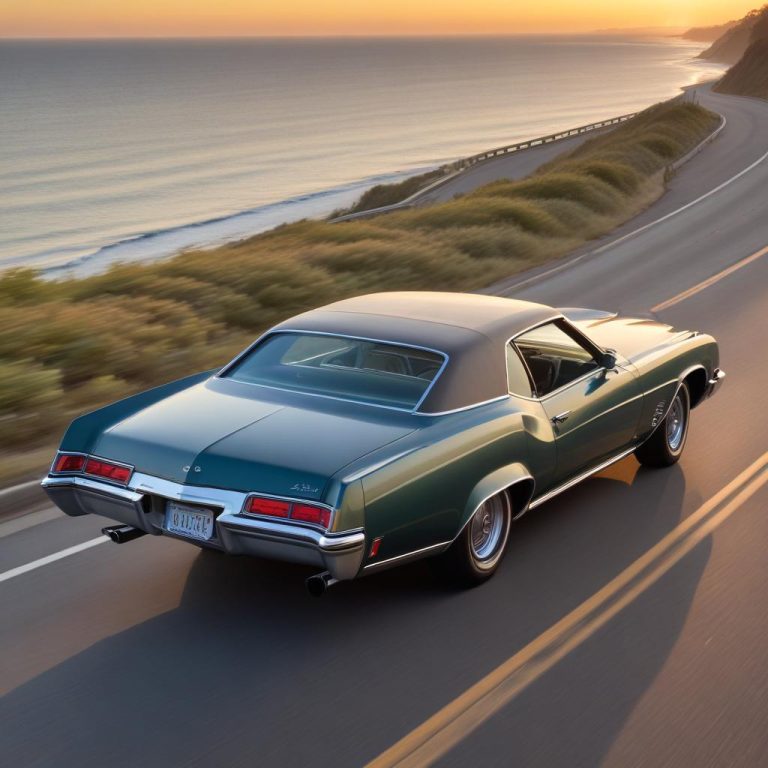
Buick Park Avenue China Edition: The RWD Luxury Flagship America Never Got
The first time you sink into the massaging rear seat of a Buick Park Avenue as its 3.6-liter V6 propels you silently past Shanghai’s skyscrapers, you realize this isn’t just a car—it’s the rear-wheel-drive luxury flagship that American Buick fans could only dream about.
TL;DR
The 2007–2012 Buick Park Avenue was a China-exclusive luxury sedan built on Holden’s rear-wheel-drive Zeta platform—the same bones as the Pontiac G8. It offered V6 power, a 3009mm wheelbase for limousine-like rear space, and features like massaging seats and a 32-inch entertainment screen. While America got the front-wheel-drive Lucerne, Chinese buyers enjoyed this Australian-American hybrid that truly embodied traditional luxury motoring.
Key Takeaways
- The Park Avenue was the first Asian-market vehicle built on GM’s global rear-wheel-drive Zeta platform, shared with the Holden Commodore and Pontiac G8.
- It measured over 5.1 meters long with a 3,009 mm wheelbase, offering exceptional rear-seat luxury for business elites.
- Engine options included 2.8L and 3.6L V6s, with a later 3.0L V6 replacing both in 2010 for better fuel economy.
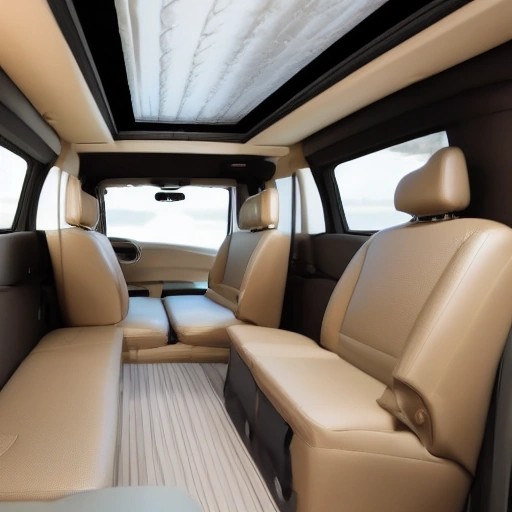
- The interior featured 8-way power massage seats, rear entertainment systems, and a full leather cabin.
- Production ran from 2007 to 2012, with the car serving as the official VIP vehicle for the Boao Forum for Asia.
The Buick That America Never Got
When you hear “Buick Park Avenue,” you might picture the comfortable front-wheel-drive sedans that cruised American streets through 2005. But in 2007, something remarkable happened in Shanghai. General Motors introduced a completely new Park Avenue—and it was nothing like the cars Americans knew.
This new flagship rode on GM’s global rear-wheel-drive Zeta platform . The same architecture that would later underpin the Pontiac G8 and Chevrolet Camaro. But while American buyers got a sporty sedan and a muscle car, Chinese buyers got something far more luxurious: a rebadged Holden Statesman with a bespoke interior designed specifically for China’s business elite .
The Australian Connection
Here’s where things get interesting. The Park Avenue wasn’t really American or Chinese—it was Australian at its core. Shanghai GM partnered with Holden, GM’s Australian subsidiary, to bring this car to life. The body came from Holden’s Elizabeth plant in South Australia, shipped as completely knocked-down kits to Shanghai for final assembly . The engines? Also Australian. Holden’s Fishermans Bend factory in Victoria exported 2.8L and 3.6L V6 engines to power this Chinese flagship .
“The Park Avenue is the perfect blend of tranquility and power,” said Shanghai GM President Ding Lei at the 2007 launch. “It shows Buick’s ability to move with the times while continuing to leverage our global resources and local knowledge.”
Built for the Back Seat
American cars are often designed for the driver. Not this one. The Park Avenue was built for the person sitting behind the driver—typically a business executive being chauffeured to meetings.
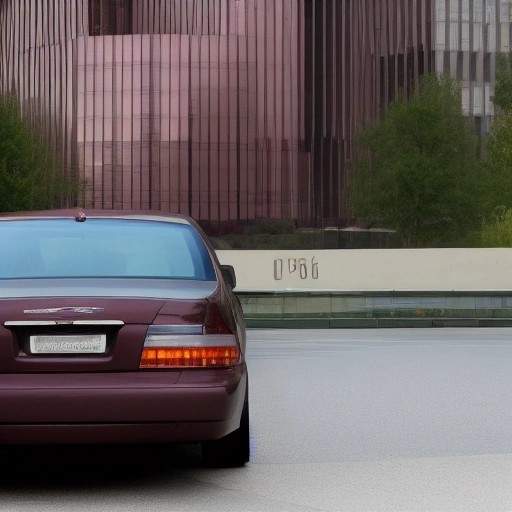
At 5,175 mm long and riding on a massive 3,009 mm wheelbase, the rear seats offered limousine-like legroom . And what seats they were. Genuine leather, eight-way power adjustment, and a built-in massage function . Rear passengers could control their own entertainment system, adjust the climate independently, and even work at fold-out trays while sipping from the refrigerator .
The 2009 model year brought even more refinement. Engineers at PATAC (Pan Asia Technical Automotive Center) applied Buick’s QuietTuning technology with nearly 20 improvements to reduce noise, vibration, and harshness—making the cabin even more serene .
Performance That Matched the Prestige
You can’t call something a flagship if it doesn’t have the power to back it up. The Park Avenue delivered with two AlloyTec V6 options.
The 3.6-liter engine produced 250 horsepower and 340 Nm of torque. That was enough to push this 1,885 kg luxury sedan from 0 to 100 km/h in just 7.8 seconds . The 2.8-liter version was no slouch either, offering 201 horsepower for buyers who prioritized efficiency over outright performance.
In 2010, both engines were replaced by a single 3.0-liter V6 producing 254 horsepower . This move improved fuel economy while maintaining the power that Chinese executives expected.
The Safety Story
For a car carrying VIPs, safety mattered. The Park Avenue came equipped with six airbags and GM’s LAN high-speed communication system for real-time sensor data processing. The 2009 update added Bosch ESP 8.0 electronic stability control and EBA emergency brake assist to the popular 2.8L Elite trim level .
Remote engine start was another thoughtful touch. You could start the car from up to 60 meters away, allowing the climate control to adjust the cabin temperature before you even opened the door .
Comparison Table: The RWD Flagship Lineup
| Feature | 2007 Park Avenue 2.8L | 2007 Park Avenue 3.6L | 2010 Park Avenue 3.0L |
|---|---|---|---|
| Platform | Zeta RWD | Zeta RWD | Zeta RWD |
| Engine | 2.8L V6 | 3.6L V6 | 3.0L V6 |
| Horsepower | 201 hp | 250 hp | 254 hp |
| Torque | 265 Nm | 340 Nm | 296 Nm |
| 0-100 km/h | 9.9 sec | 7.8 sec | ~8.0 sec |
| Transmission | 5-speed auto | 5-speed auto | 6-speed auto |
| Wheelbase | 3,009 mm | 3,009 mm | 3,009 mm |
| Starting Price (RMB) | ¥328,800 | ¥388,800 | ~¥350,000 [est.] |
What American Buyers Missed
While Chinese executives enjoyed this rear-wheel-drive masterpiece, American Buick dealers were selling the front-wheel-drive Lucerne. It was a perfectly fine car, but it wasn’t a flagship. It didn’t have the Holden DNA, the Zeta platform, or the sheer presence of a car built for the back seat.
The irony? A version of this very car did eventually make it to America—but not as a Buick. The Chevrolet Caprice PPV, used primarily as a police patrol vehicle, was essentially the same Holden-derived platform . Police officers got rear-wheel-drive V6 performance. Luxury buyers got the Lucerne.
A Short But Glorious Run
The Chinese Park Avenue had a relatively brief production run from 2007 to 2012 . It served as the official VIP vehicle for the Boao Forum for Asia in both 2008 and 2009, cementing its status as China’s preferred executive transport . By October 2012, production ended. Buick would later replace it with a new flagship, but the rear-wheel-drive Park Avenue remained a unique chapter in the brand’s global story.
FAQ
1. Was the 2007 Buick Park Avenue sold in America?
No, this rear-wheel-drive Park Avenue was exclusive to the Chinese market and never offered in North America.
2. What platform did the Chinese Park Avenue use?
It used GM’s global rear-wheel-drive Zeta platform, the same architecture as the Holden Commodore, Pontiac G8, and Chevrolet Camaro .
3. Where were the engines for the Park Avenue built?
The V6 engines were built at Holden’s engine plant in Fishermans Bend, Victoria, Australia, and exported to China .
4. What made the rear seats so special?
They featured 8-way power adjustment, genuine leather, built-in massage function, and their own climate and entertainment controls .
5. What engines were available in the Park Avenue?
Initially, a 2.8L V6 (201 hp) and 3.6L V6 (250 hp). In 2010, both were replaced by a single 3.0L V6 (254 hp) .
6. Was the Park Avenue related to the American Buick Lucerne?
No, the Lucerne was front-wheel-drive and built on a different platform. The Chinese Park Avenue was rear-wheel-drive and based on the Holden Statesman .
7. How long was the Park Avenue produced?
Production ran from 2007 to 2012 in China .
Which Buick flagship would you choose—the American Lucerne or the RWD Chinese Park Avenue? Share your thoughts in the comments.
For further reading: