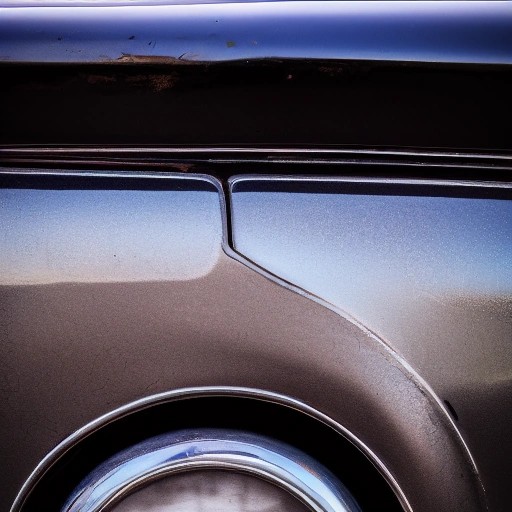
The History of Buick’s VentiPorts: From Functional Cooling to Iconic Styling
The first time you spot those iconic chrome rings on the side of a vintage Buick, you’re not just looking at a design quirk—you’re seeing one of the most enduring styling signatures in automotive history, born from a designer’s whimsical experiment and a boss who loved it.
TL;DR
Buick’s VentiPorts started in 1949 when designer Ned Nickles cut holes in his personal Roadmaster and installed flashing amber lights to mimic fighter plane exhaust flames. GM boss Harlow Curtice loved the look and ordered non-lighting versions for production. The number of ports—three or four—originally signaled engine size, with the top-tier Roadmaster getting four. They became purely decorative, disappeared briefly in 1958–59, returned in 1960, and have come and gone ever since as Buick’s most recognizable styling cue.
Key Takeaways
- The first VentiPorts appeared on the 1949 Buick Roadmaster, inspired by World War II fighter planes.
- They were originally functional heat extractors, but the benefit was short-lived—they became plugged and purely decorative within the first year.
- Four VentiPorts meant the powerful Roadmaster; three meant the Super or Special.
- The design disappeared in 1958 and 1959 but returned in 1960, becoming a permanent part of Buick’s identity.
- Modern Buicks have revived the portholes multiple times, with the number sometimes indicating cylinder count rather than model hierarchy.
The Birth of an Icon: A Designer’s Late-Night Experiment
You have to picture the scene. It’s 1948, and Buick’s chief stylist Ned Nickles is looking at his personal 1948 Roadmaster convertible and thinking it needs some excitement. So he does something that would horrify most car owners today—he cuts holes in the hood sides. Behind them, he installs amber lights wired to the distributor. The result? When the engine runs, the lights flash on and off in time with each piston’s firing.
The effect was meant to simulate flames shooting from the exhaust stacks of World War II fighter planes. Nickles had been watching those planes accelerate on takeoff, fire belching from their stubby exhausts, and he wanted to capture that raw, powerful energy on his Buick. Combined with the bombsight hood ornament that already graced Buicks, the flashing lights made the driver feel like they were at the controls of a fighter aircraft.
When Buick manufacturing manager Ed Ragsdale saw what Nickles had done, he reportedly thought the designer had “ruined” his convertible. But then Buick general manager Harlow Curtice got a look. Curtice was obsessed with Buick—he later became president of General Motors but never lost his passion for the brand. He loved the portholes so much that even though the 1949 models were only seven months from production, he ordered them installed on all new Buicks.
The lights, however, had to go. Too complex and expensive for production.
More Than Just a Pretty Face: The Functional (Sort Of) VentiPort
Buick’s marketing team had to come up with a justification for these strange new holes. They called them “VentiPorts” and claimed they helped ventilate the engine compartment, allowing hot air to escape. The sales brochure noted that air entered through the grille, was pressurized by the radiator fan, and exited through the VentiPorts.
It was a nice story. And for the very earliest 1949 models, it might even have been true. But sometime during that first model year, the VentiPorts were plugged. They became purely decorative. The name stuck, but the ventilation function was history.
Three or Four: The Language of VentiPorts
From day one, the number of VentiPorts meant something. In 1949, the top-of-the-line Roadmaster with its 320-cubic-inch straight-eight engine got four VentiPorts on each side. The Super (263 cubic inches) and the Special (248 cubic inches) made do with three.
This wasn’t just about engine displacement—it was about status. You could tell at a glance who had the big engine and, by extension, who had the bigger wallet. Kids on the street quickly learned to count the portholes to identify a car’s model.
In 1953, Buick introduced the new “Nailhead” V8, which was more compact than the old straight-eight. The mechanical reason for four ports—a longer engine bay—disappeared. But the tradition persisted. The 1953 Super got a 322 V8 and kept three ports, while the Roadmaster had four. Then things got interesting. The 1954 Century paired the Roadmaster’s 200-horsepower engine with the smaller Special body—and got four VentiPorts anyway, making it the “banker’s hot rod”.
By 1955, the Super was promoted to four VentiPorts despite having the smaller engine, while the Invicta, which replaced the Century in 1959, had the big engine in a small body but was demoted to three ports. The meaning had shifted from engine size to body size and model hierarchy.
The VentiPort Timeline
- 1948: Ned Nickles installs flashing lights in his personal Roadmaster; Harlow Curtice loves it.
- 1949: First production VentiPorts appear; four for Roadmaster, three for others; touted as functional heat extractors.
- 1950: VentiPorts become purely decorative and remain so going forward.
- 1953: New “Nailhead” V8 introduced; VentiPort count still tied to model hierarchy.
- 1954: The Century gets four ports despite sharing the Special’s smaller body.
- 1955: Super promoted to four ports.
- 1958–59: VentiPorts disappear entirely.
- 1960: VentiPorts return; four on Electra, three on Invicta and LeSabre.
- 1983: Last appearance on the Electra before long hiatus.
- 2003: VentiPorts return on the Park Avenue Ultra.
- 2006: Lucerne brings back the three-or-four rule tied to engine cylinders.
- 2008: LaCrosse revives the feature on the hood.
- 2019: Last appearance on LaCrosse.
The Comeback: Portholes in the Modern Era
After a long absence—the last VentiPorts appeared on the 1983 Electra—Buick revived the feature in 2003 on the Park Avenue Ultra. The timing was deliberate: Buick’s centennial year called for a nod to its design heritage. Three portholes appeared on each side, and for the first time in decades, they were said to be “functional” again, helping cool the engine compartment.
The real revival came with the 2006 Lucerne. Buick returned to the classic formula: V6 models got three VentiPorts, while V8 models got four. It was a direct callback to the system from 1949–1954. In 2008, the LaCrosse introduced a more modern interpretation, with the portholes sitting on the inner hood ridges rather than the fenders.
Why VentiPorts Endure
You might wonder why a non-functional styling feature has survived for over 75 years. The answer is simple: recognition. VentiPorts are arguably the most famous of all Buick identifiers. As Buick chief designer Dennis Burke put it, “The portholes are a strong brand identifier that people still associate with Buick”.
They tell a story—of post-war optimism, fighter plane romance, and a time when car design was allowed to be whimsical. A 1949 Buick with those four chrome rings on each side isn’t just a car; it’s a piece of American history, a reminder that sometimes the best design decisions happen when someone takes a risk and cuts a few holes in a hood.
FAQ
1. What are the holes on the side of classic Buicks called?
They’re officially called VentiPorts, though most people simply call them portholes. The name was a marketing invention to suggest they helped ventilate the engine compartment.
2. Did VentiPorts ever have a real function?
For a very short time in early 1949, they may have helped extract hot air from the engine bay. But they were quickly plugged and became purely decorative.
3. Why do some Buicks have three VentiPorts and others have four?
Originally, four meant the top-tier Roadmaster with the bigger engine; three meant the Super or Special. Over time, the meaning shifted to model hierarchy and, more recently, to the number of cylinders.
4. Who invented the VentiPort?
Buick styling chief Ned Nickles invented them for his personal 1948 Roadmaster. He installed flashing amber lights behind the holes to simulate fighter plane exhaust flames.
5. What inspired the VentiPort design?
Nickles drew inspiration from World War II fighter planes, watching flames shoot from their exhaust stacks during takeoff. Some also point to the 1910 Buick Bug race car as an earlier inspiration.
6. Do modern Buicks still have VentiPorts?
The feature has appeared intermittently, most recently on the LaCrosse up to 2019. Current Buick SUVs like the Enclave no longer feature VentiPorts.
7. Did the lights from Nickles’ original design ever make it into production?
No. The flashing lights were too complex and expensive, so production VentiPorts appeared without them.
Which Buick porthole era is your favorite—the classic 1949 originals, the 1960s Electra versions, or the modern hood-mounted designs? Share your thoughts in the comments.
For further reading: